“Before anything else, I spend time figuring out where to stand. That’s when I really start to see the river.”
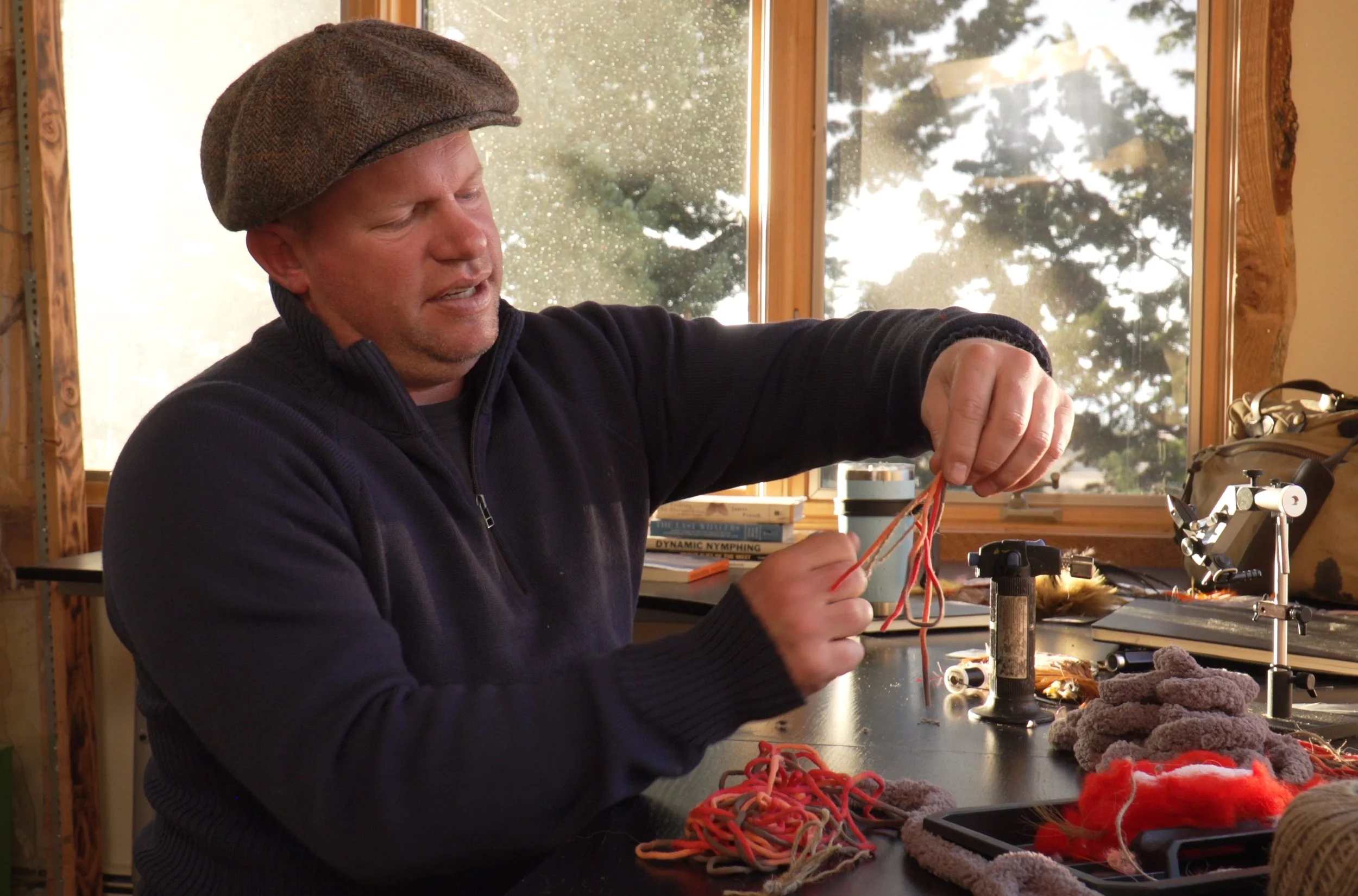
Ben tying a Fly Brush
BEN MILLER IS a contemporary American artist known for Fly-Cast Painting — creating large-scale paintings of rivers by casting paint with a fly rod onto clear acrylic sheets or blocks .
Before any paint is mixed or any cast is made, Miller studies the river. He walks its banks, watching how water moves over stone, where foam collects, how light breaks and recedes. Choosing where to stand determines how best to see the river — and what kind of painting can be made. This moment of orientation is where the work begins.
Ben paints with equipment familiar to any dedicated caster: a 9-foot Winston Boron rod for most marks, and a 13.5-foot Winston Spey rod when greater force or distance is needed. The reel becomes part of the paint-delivery system, managing line and momentum as loaded Fly Brushes are carried through the air with precision.
“A fly rod is the epitome of a carefully crafted taper. From the base of the reel seat to the last guide on the tip of the rod, it moves a line that shares the same weighted, thicker-to-thinner shape.”
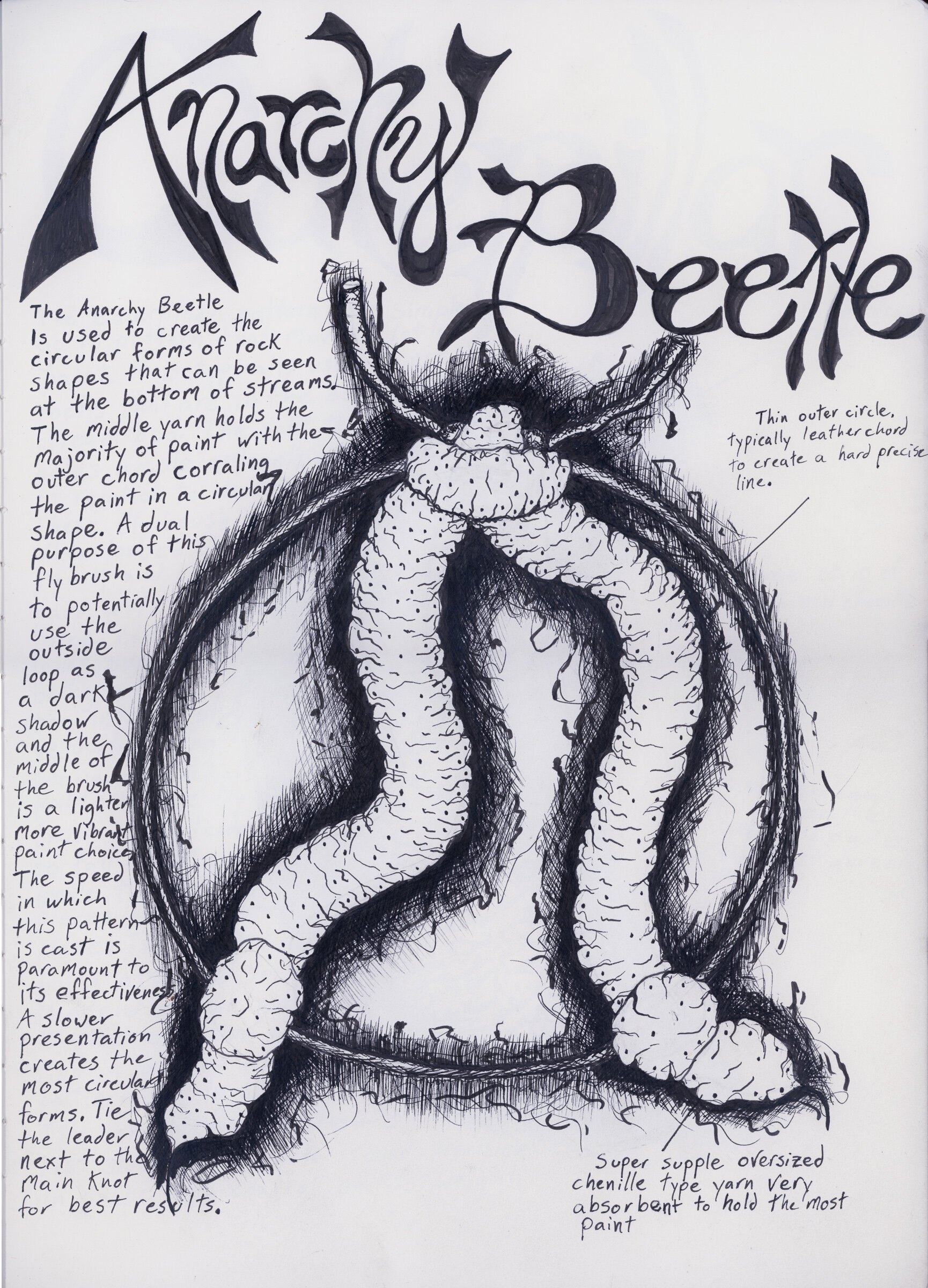
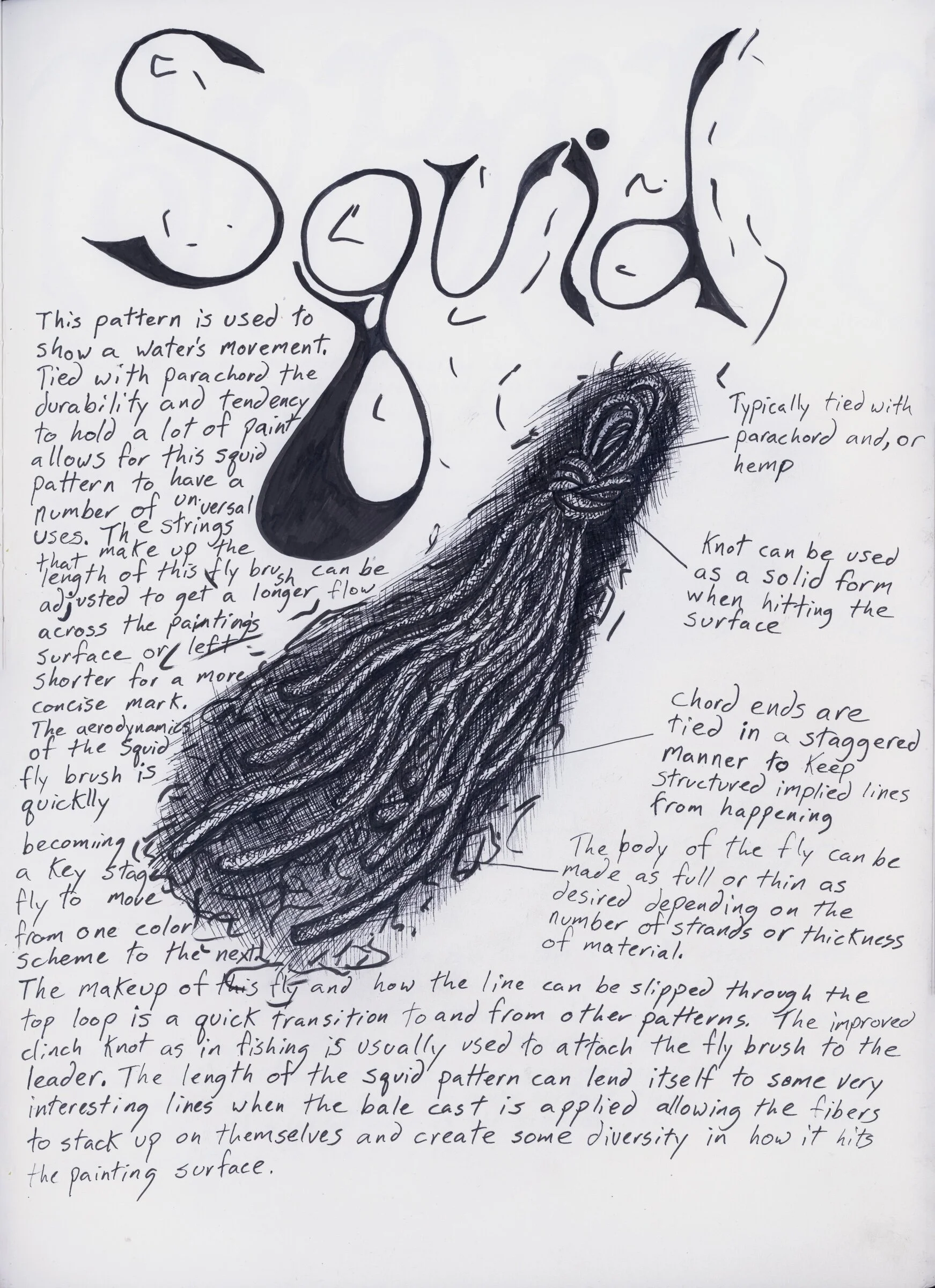
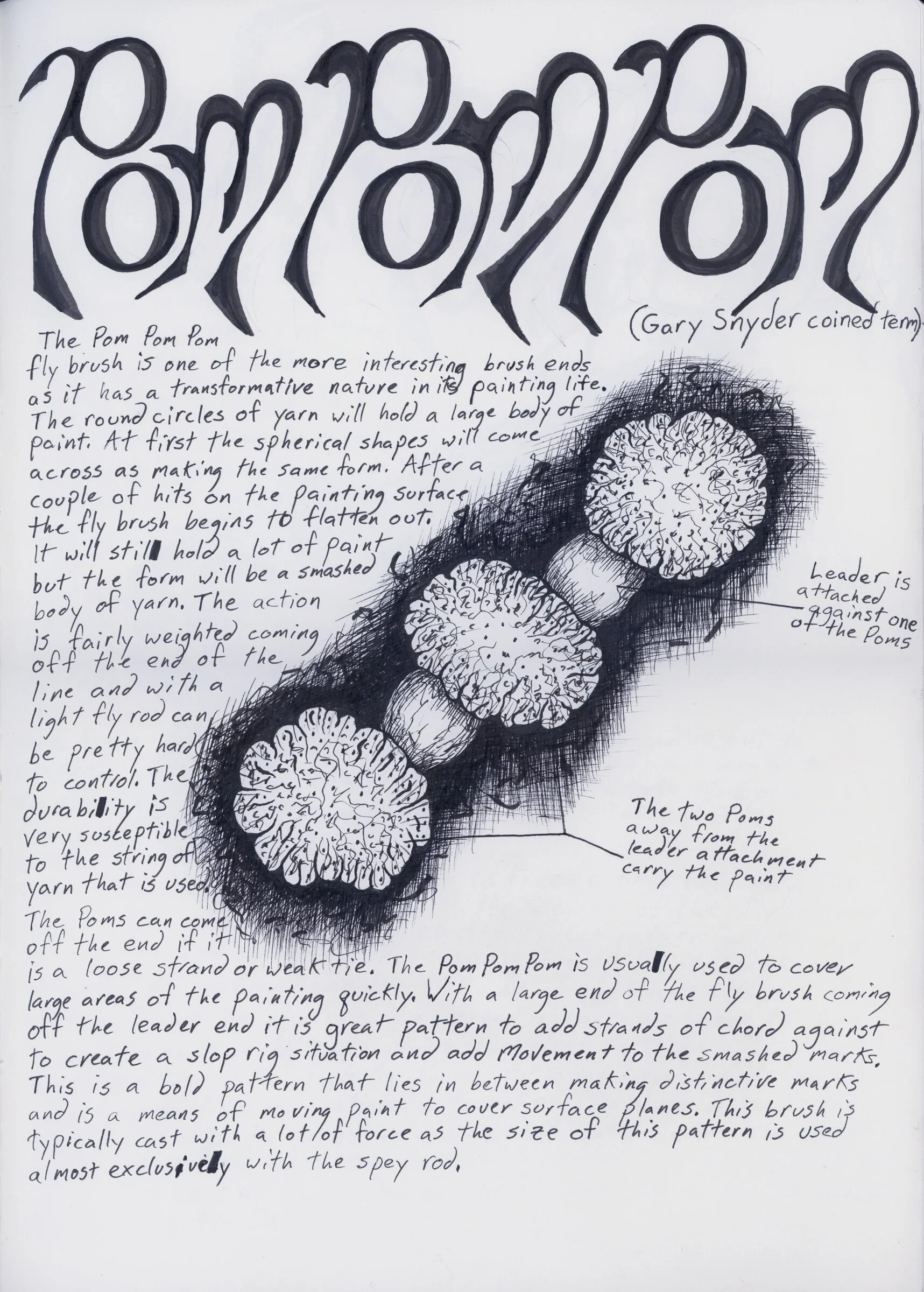
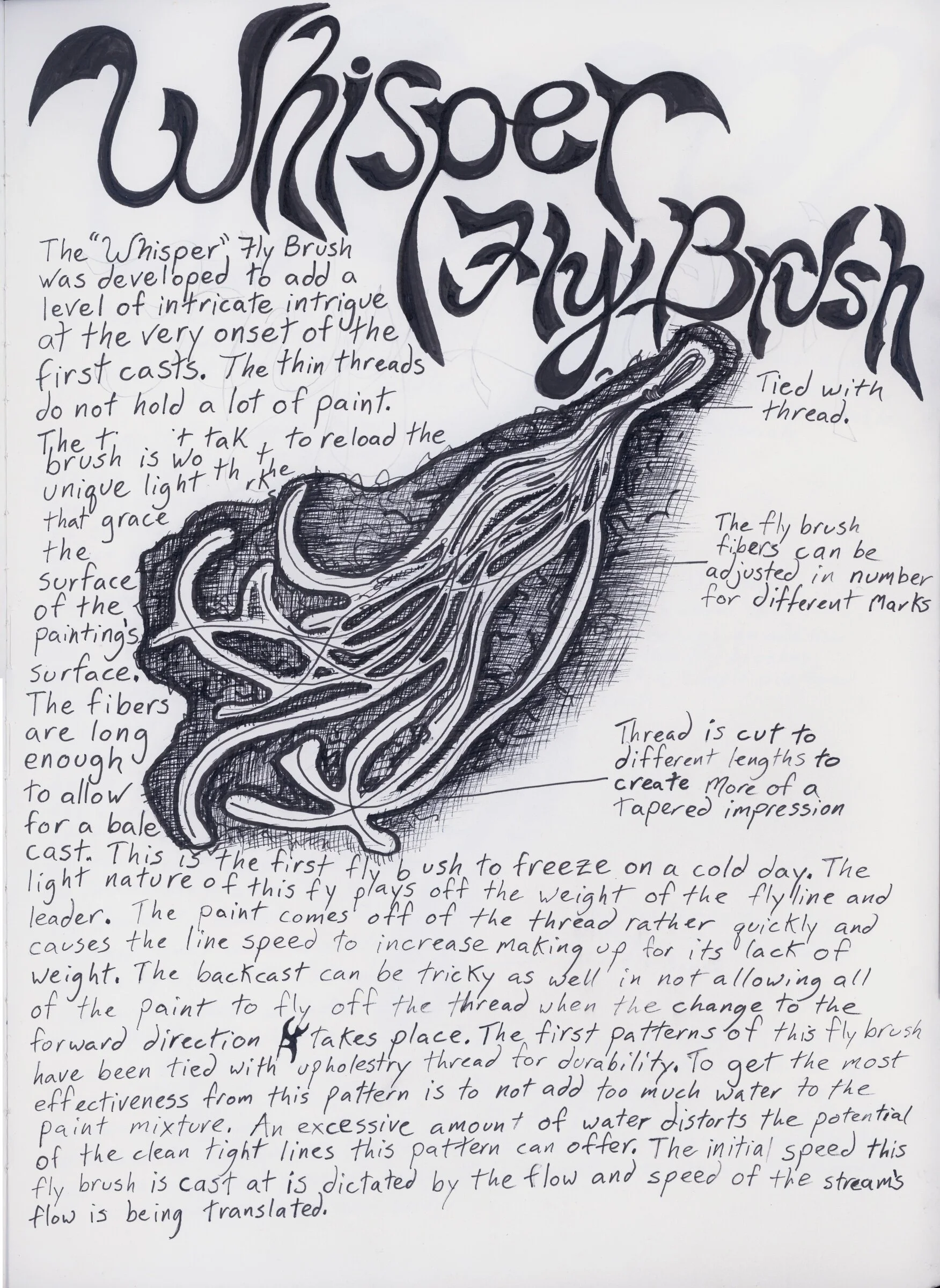
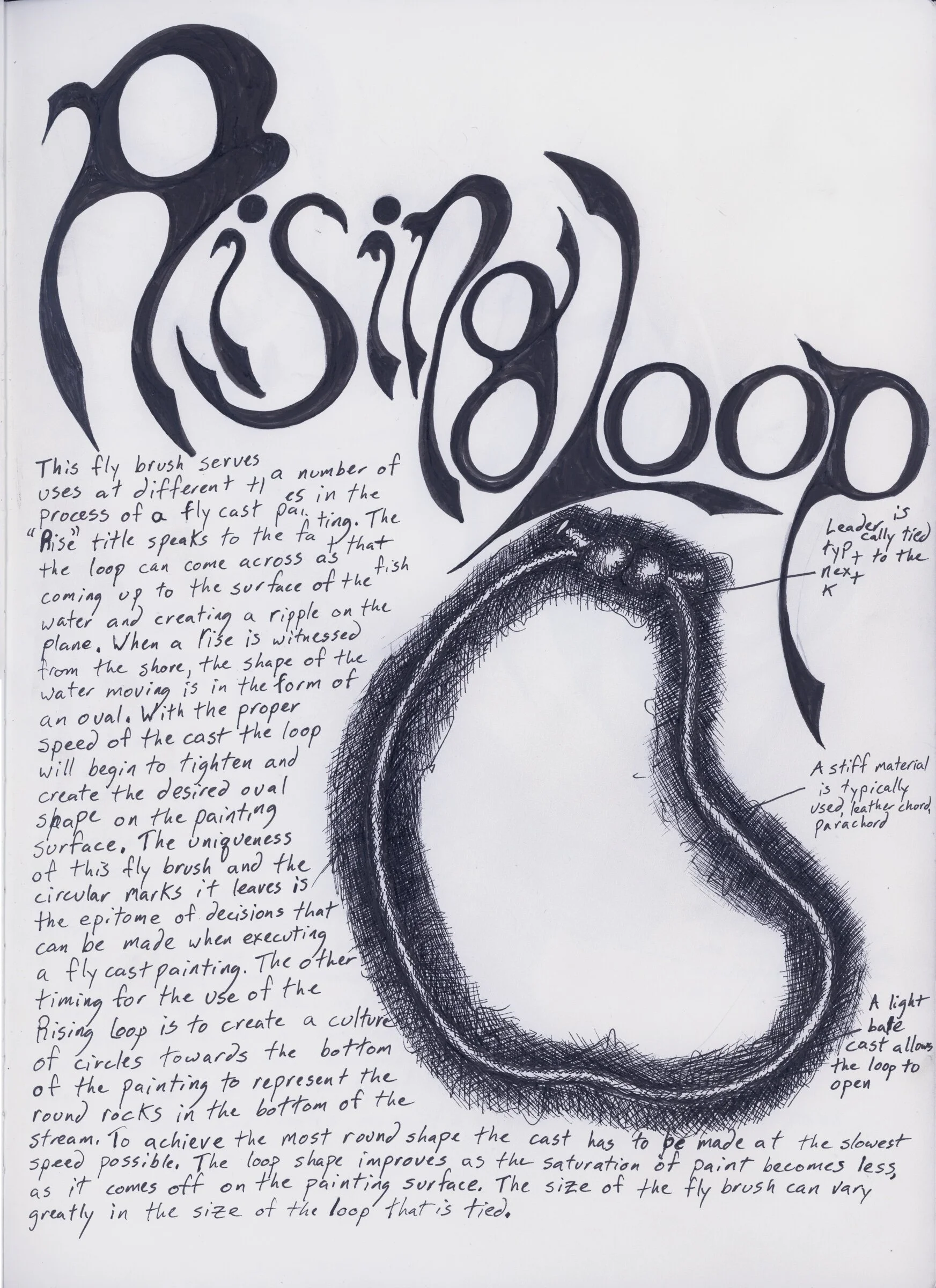
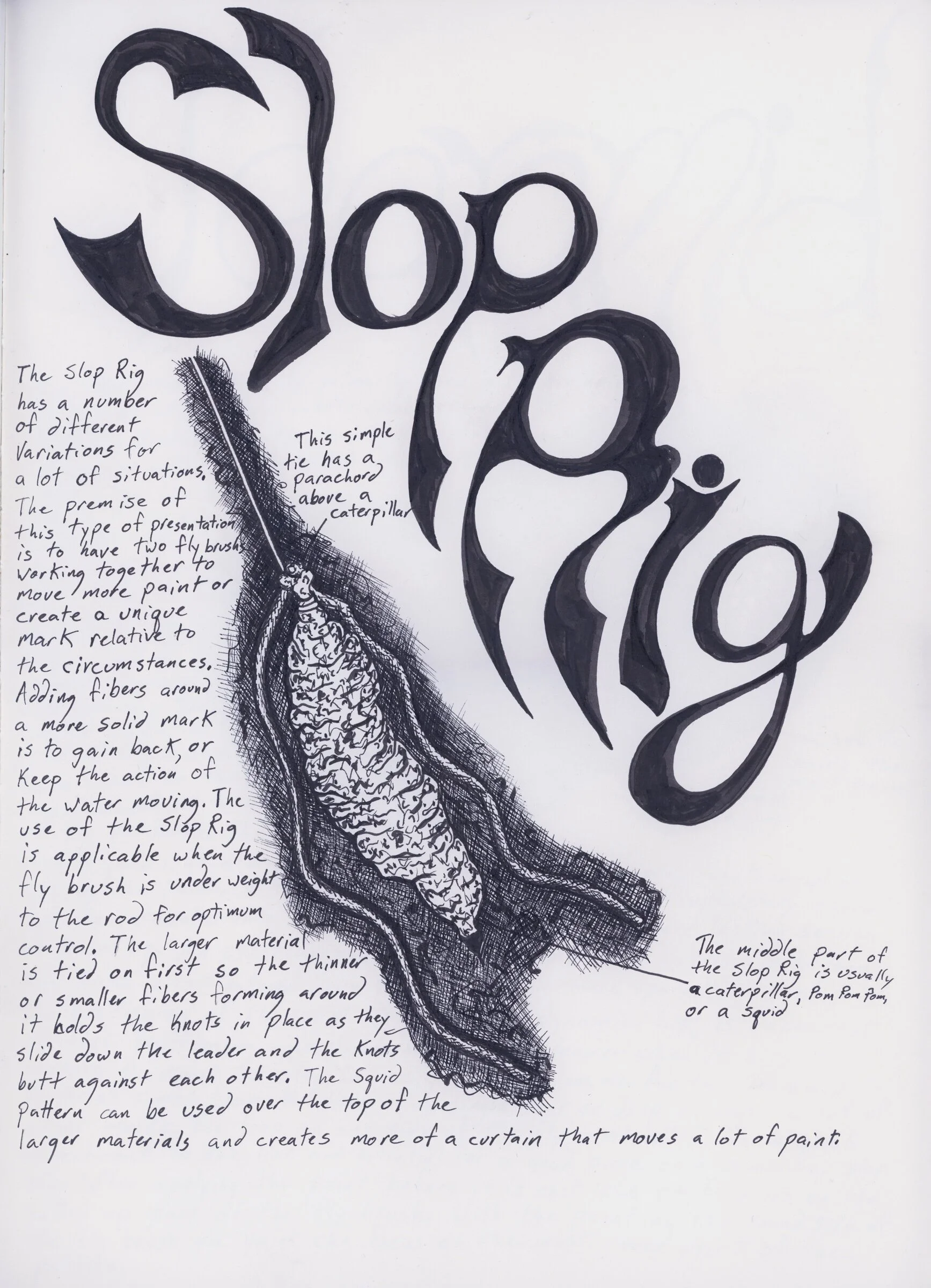
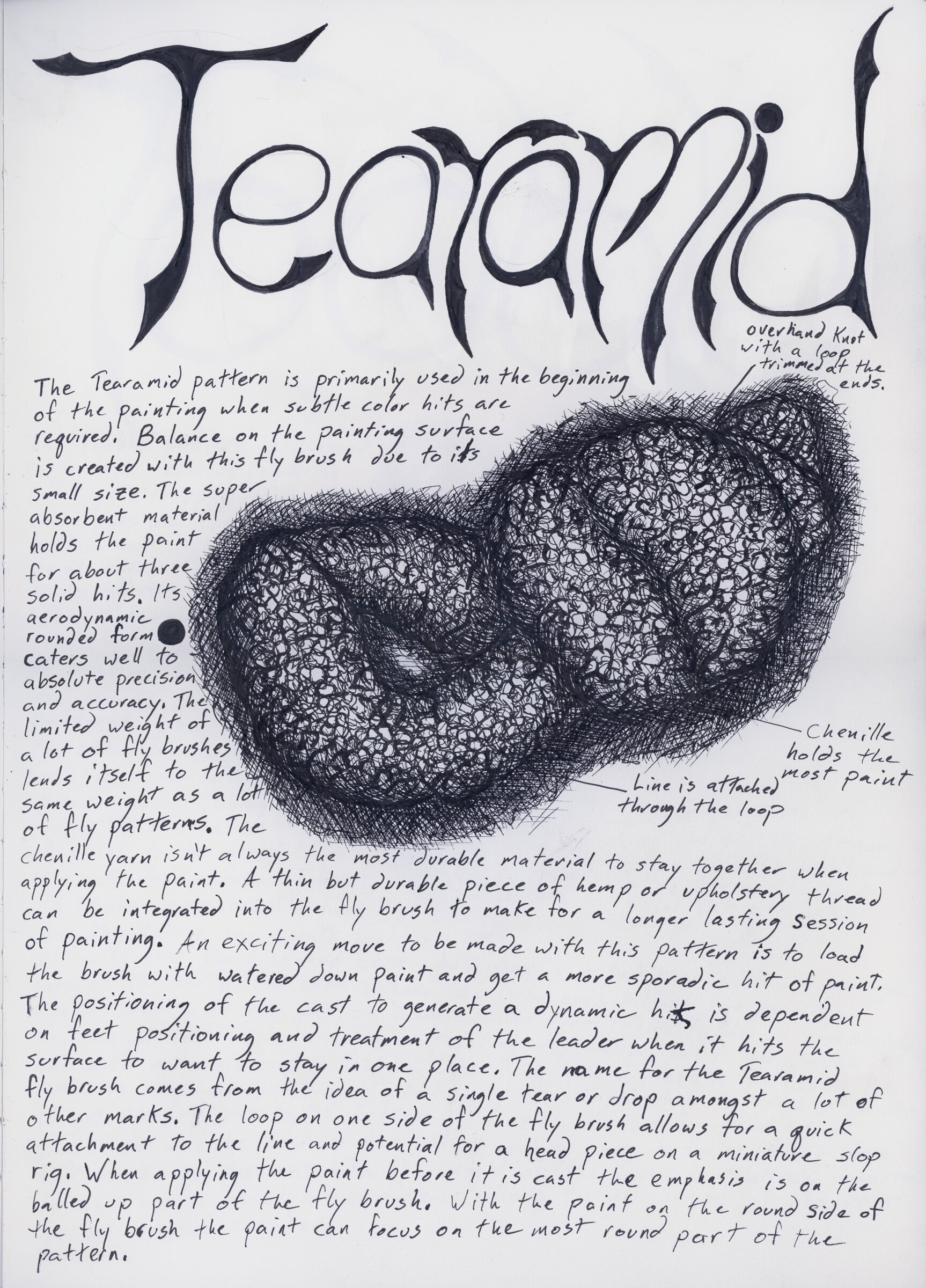
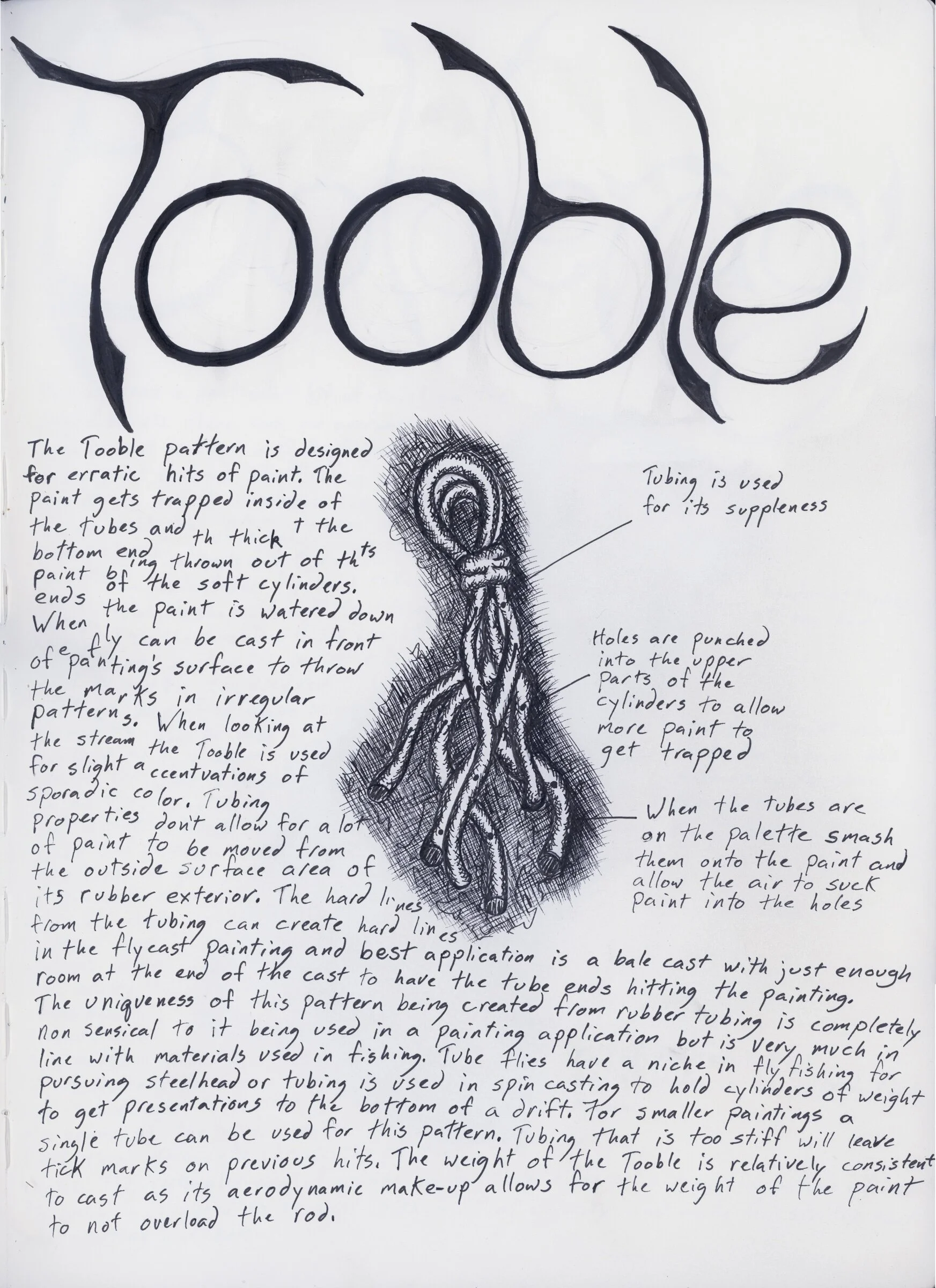
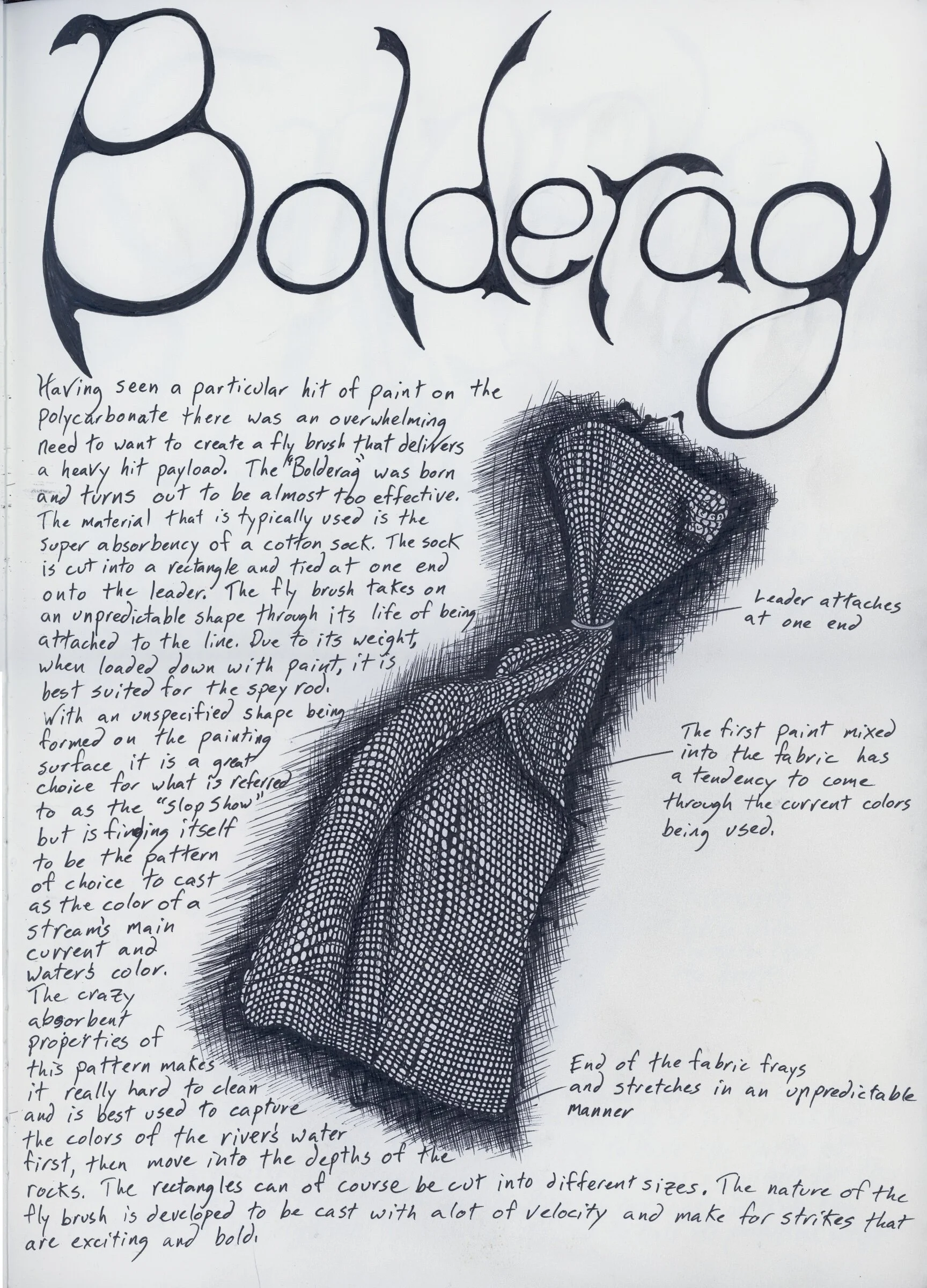
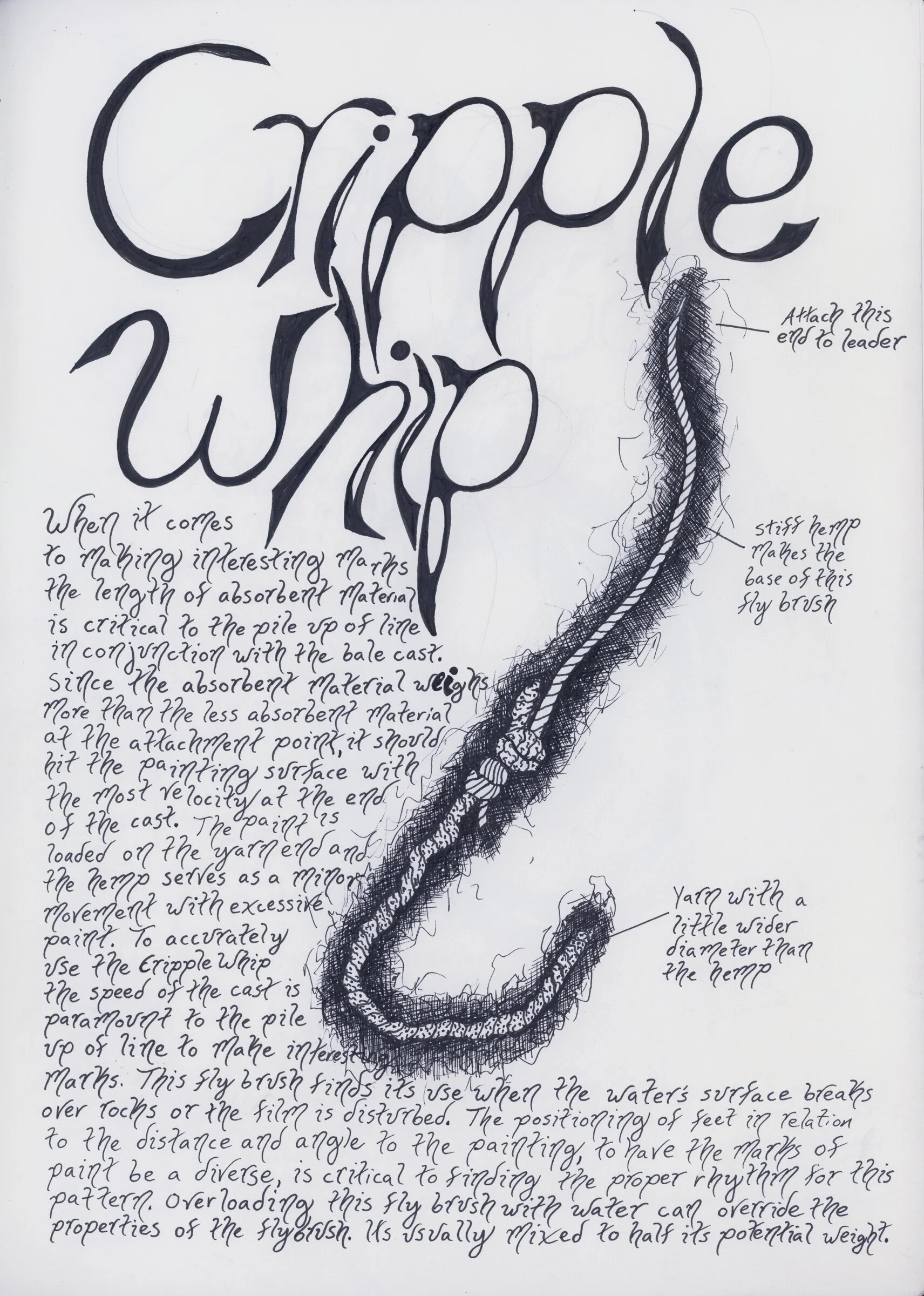
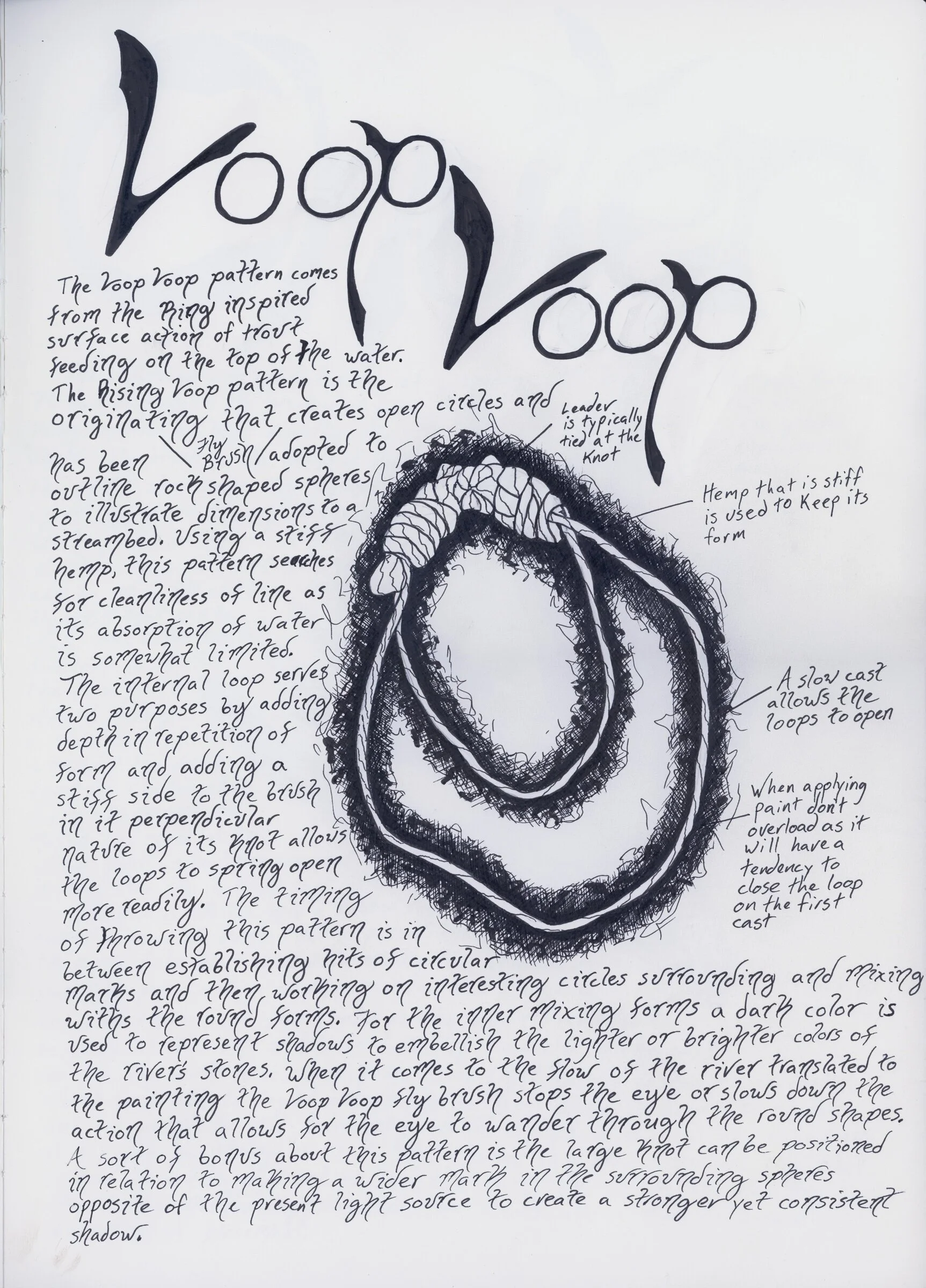
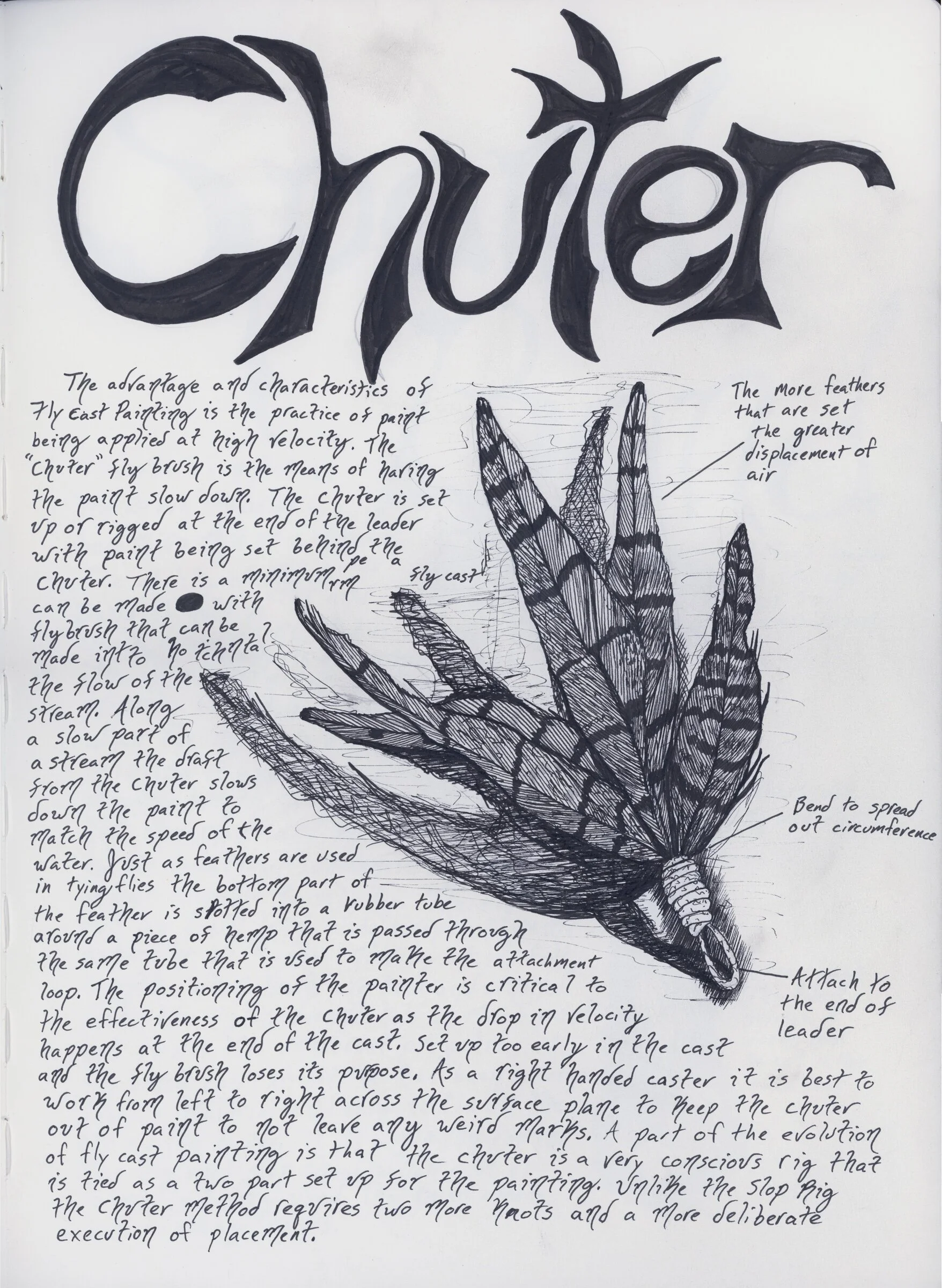
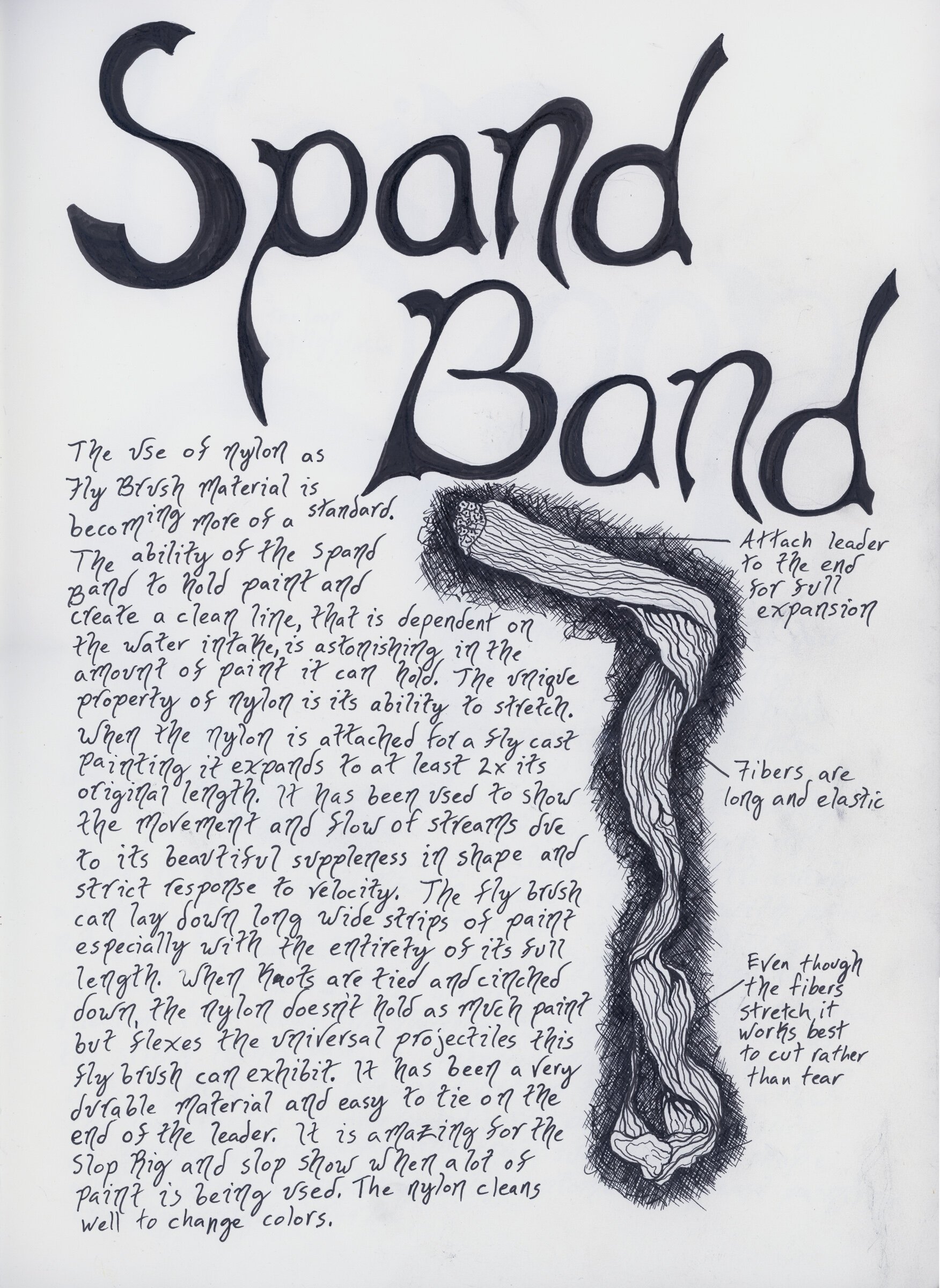
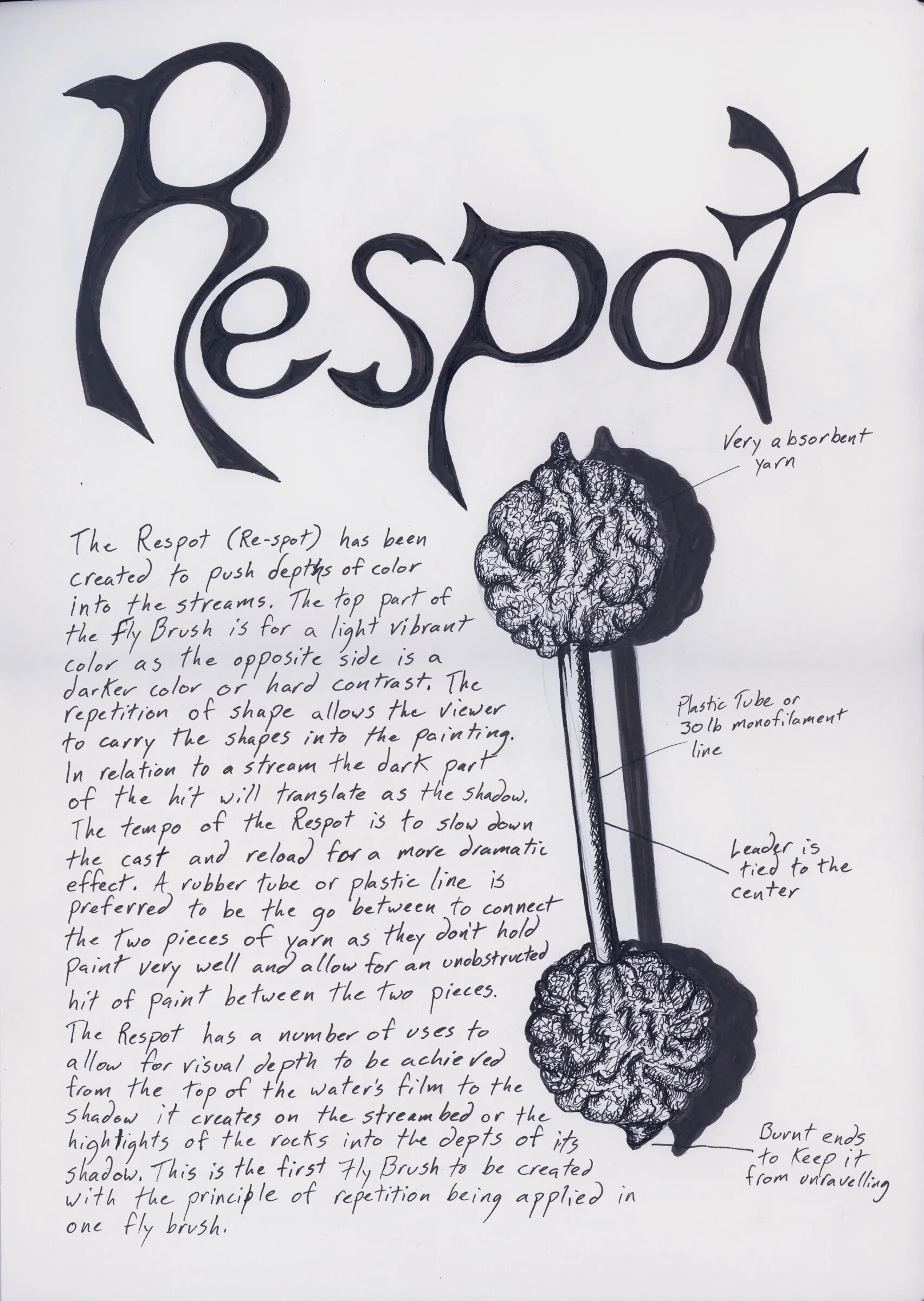
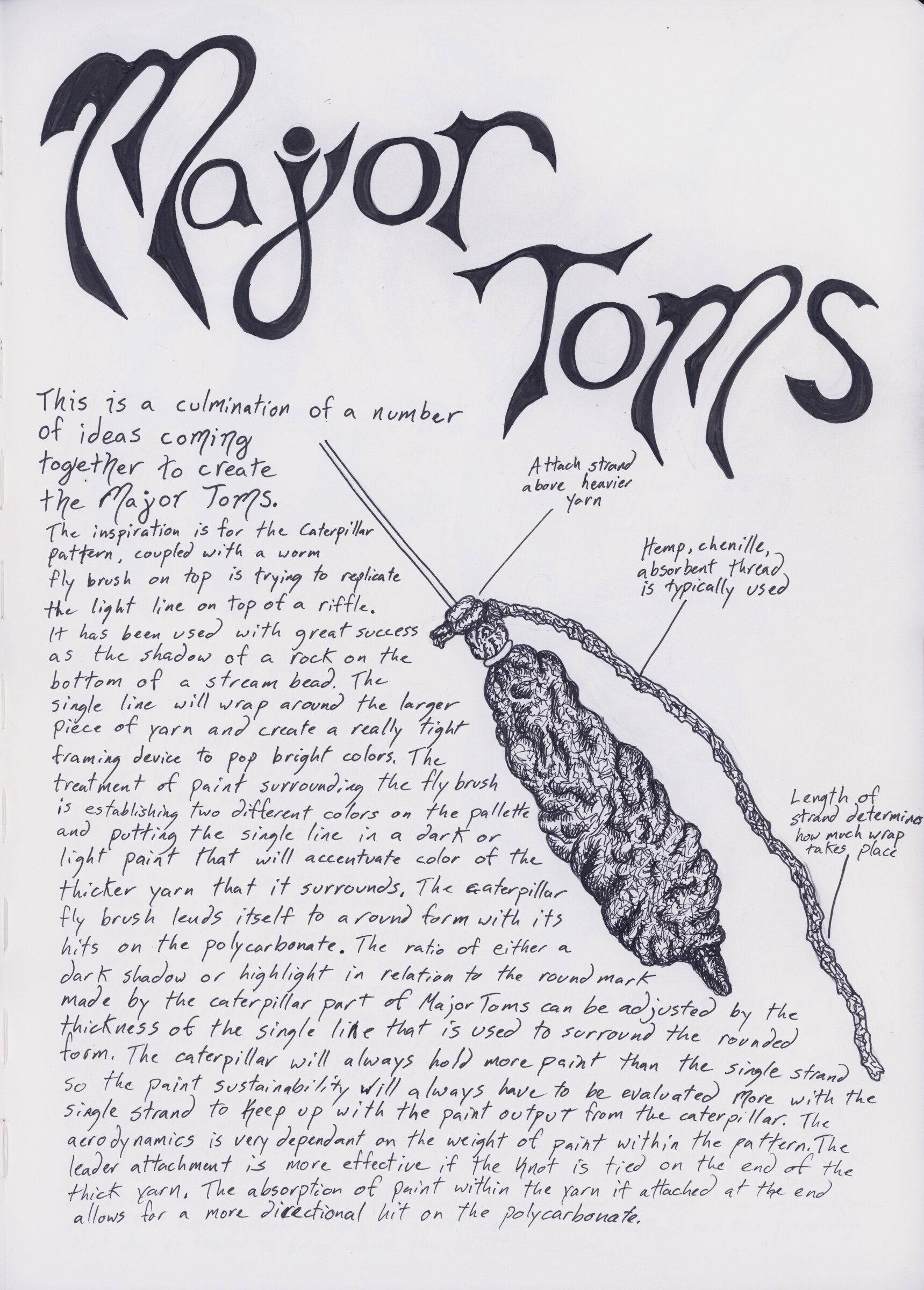
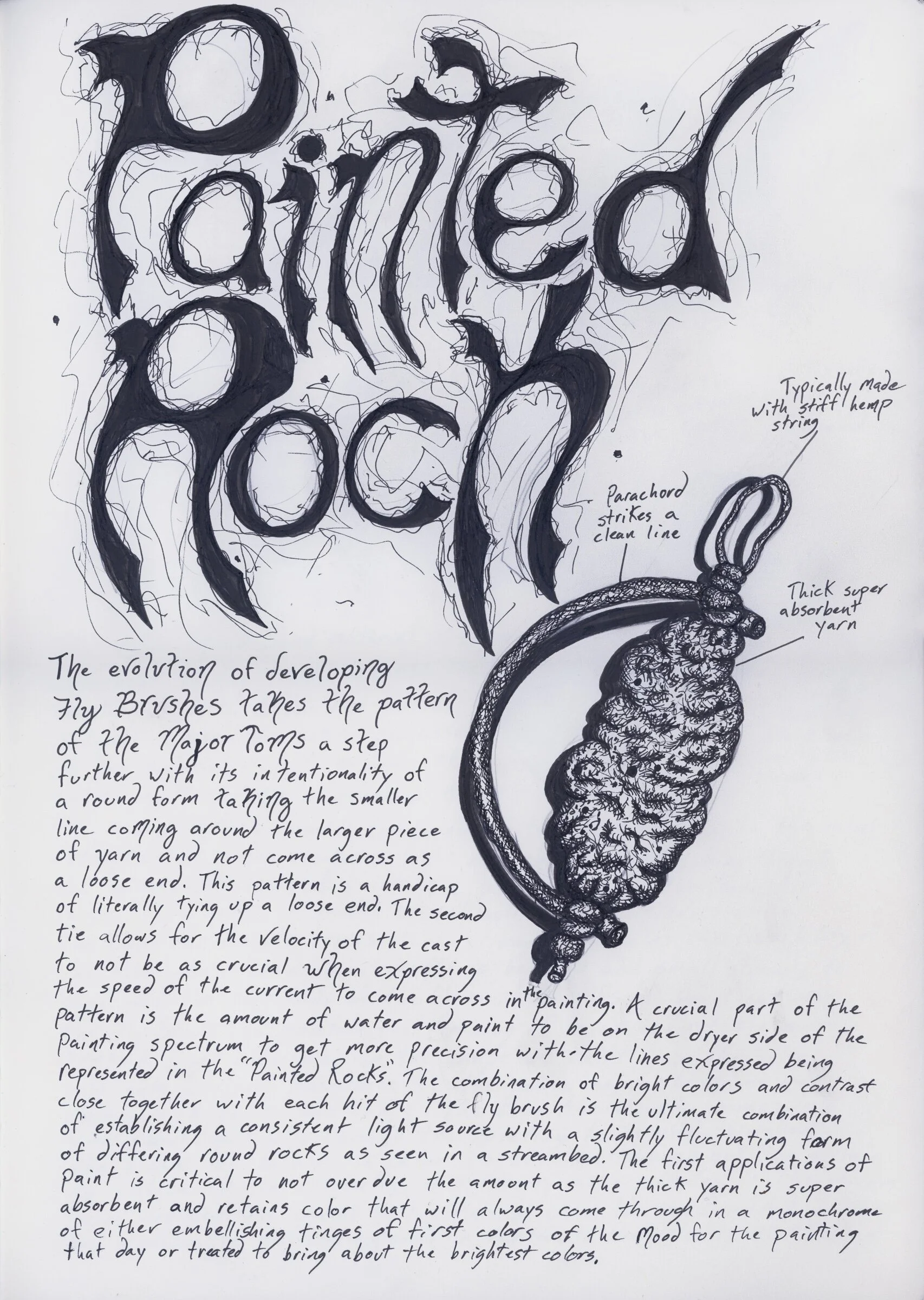
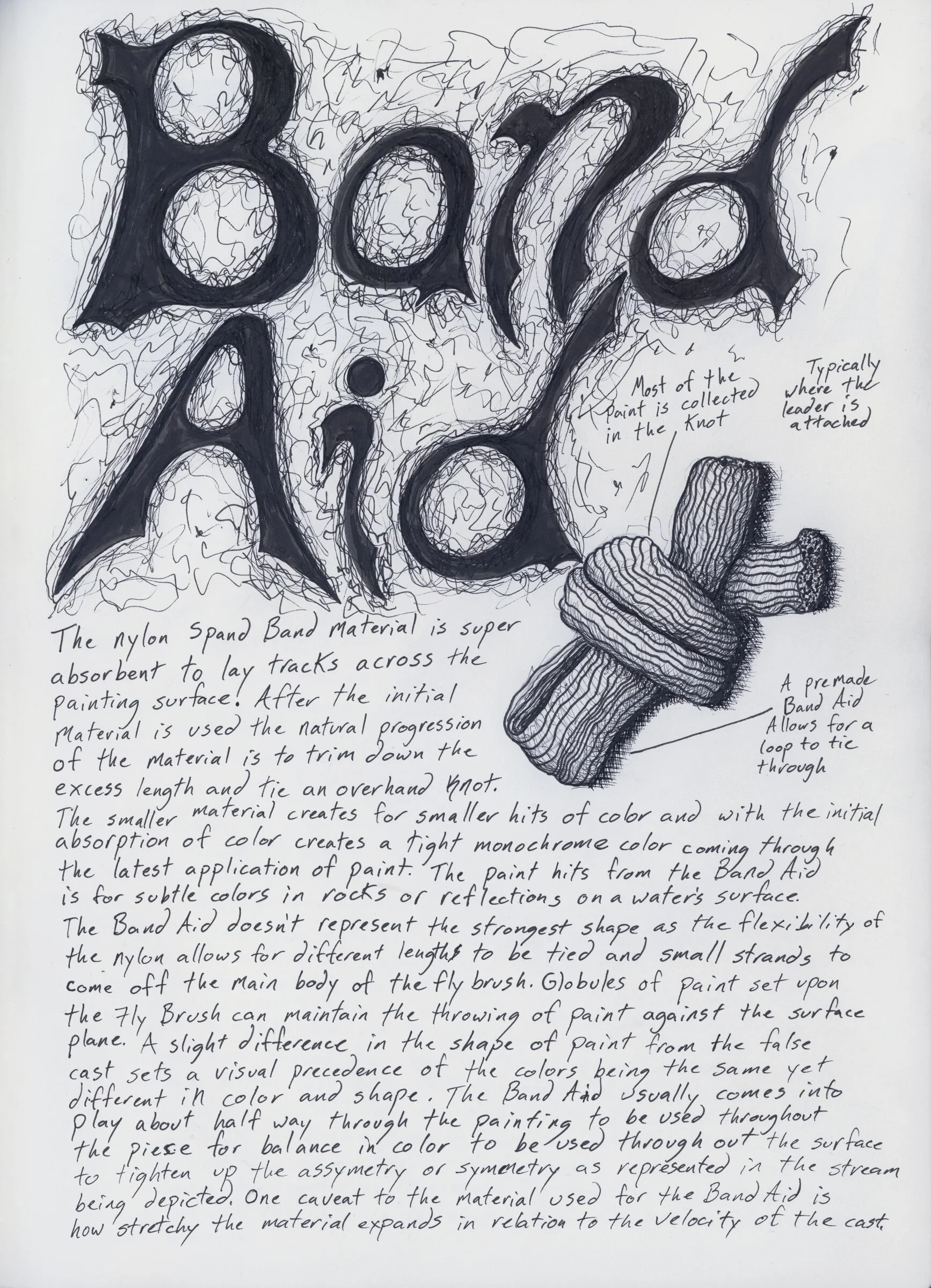
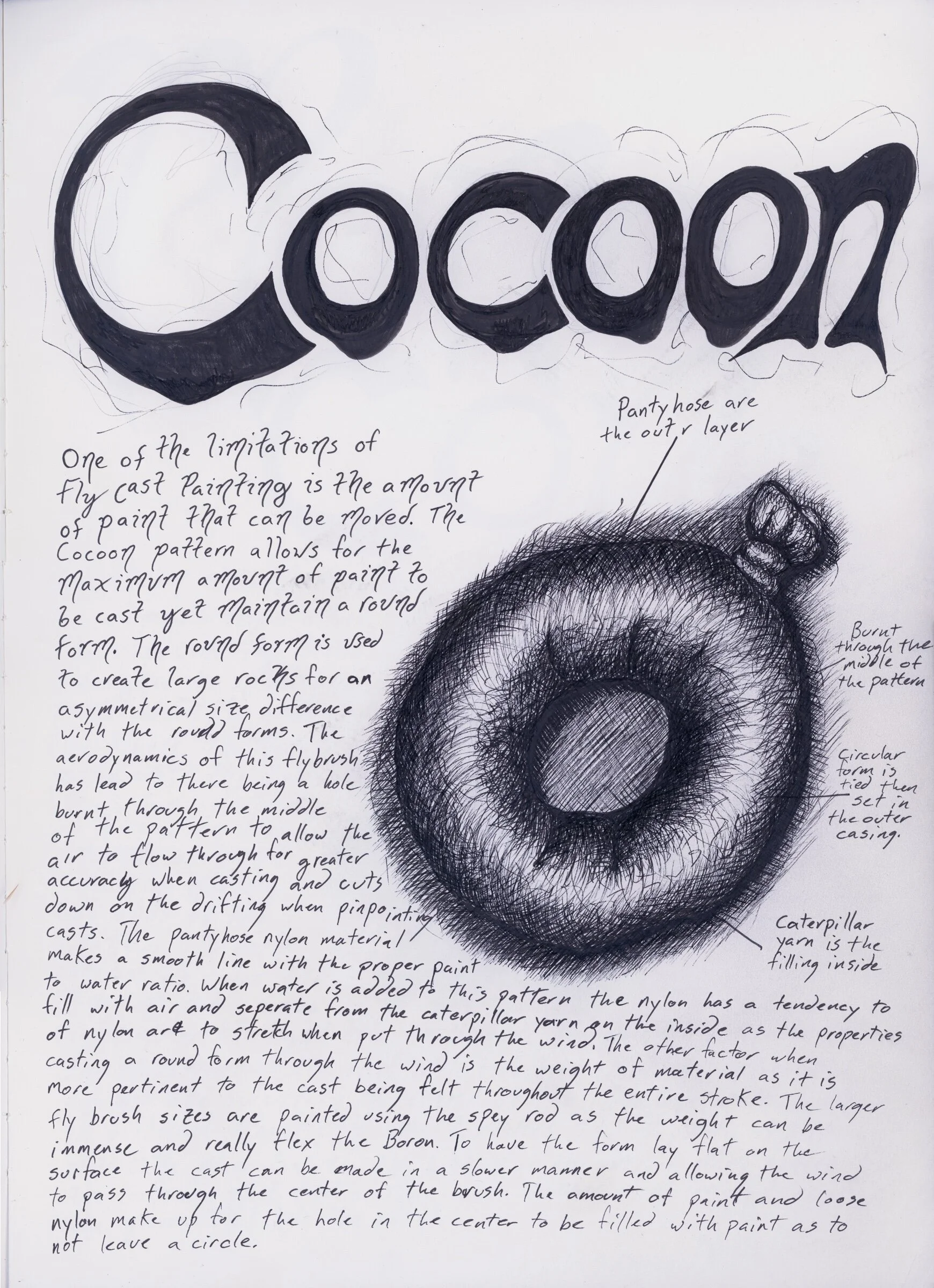
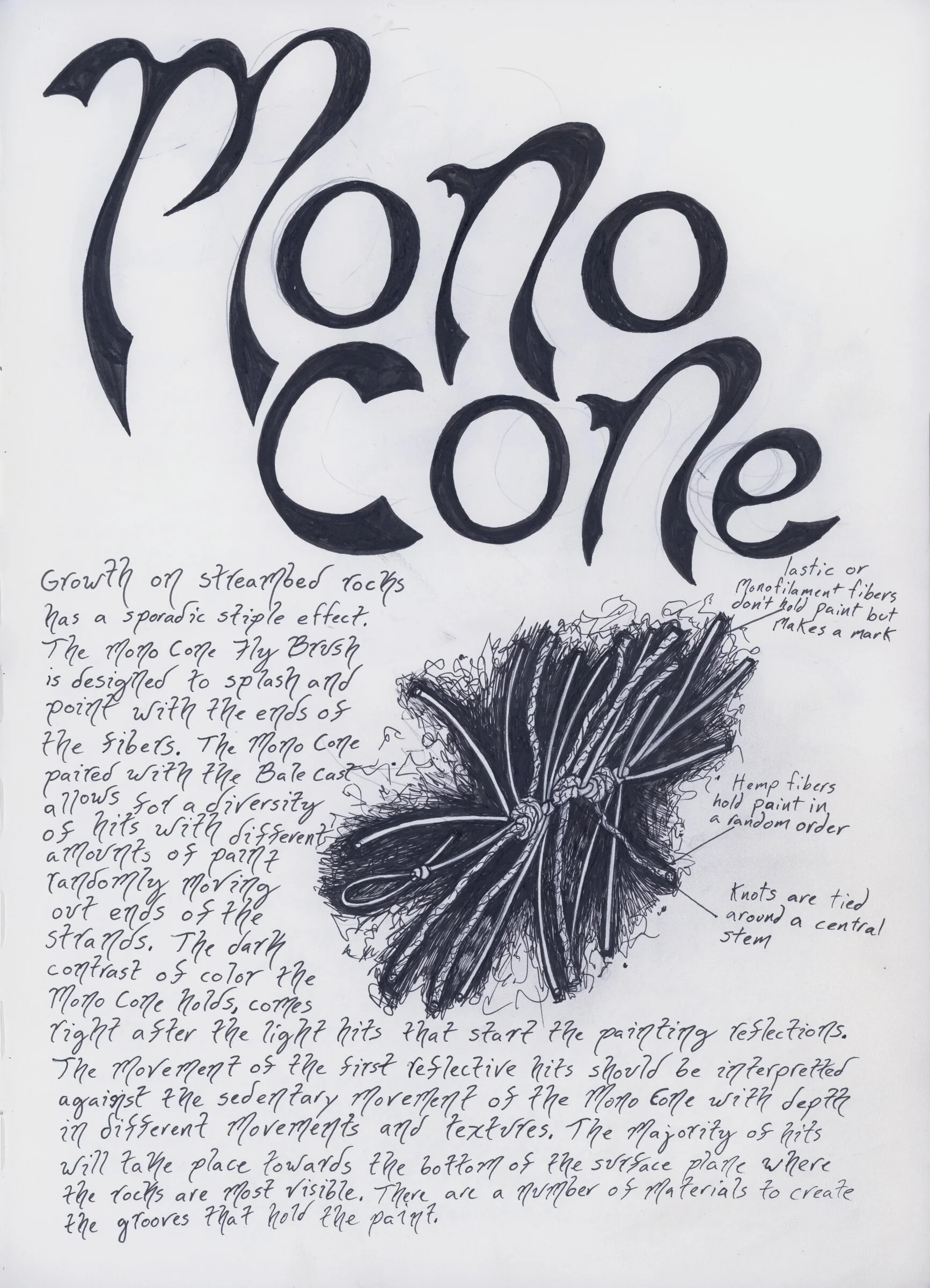
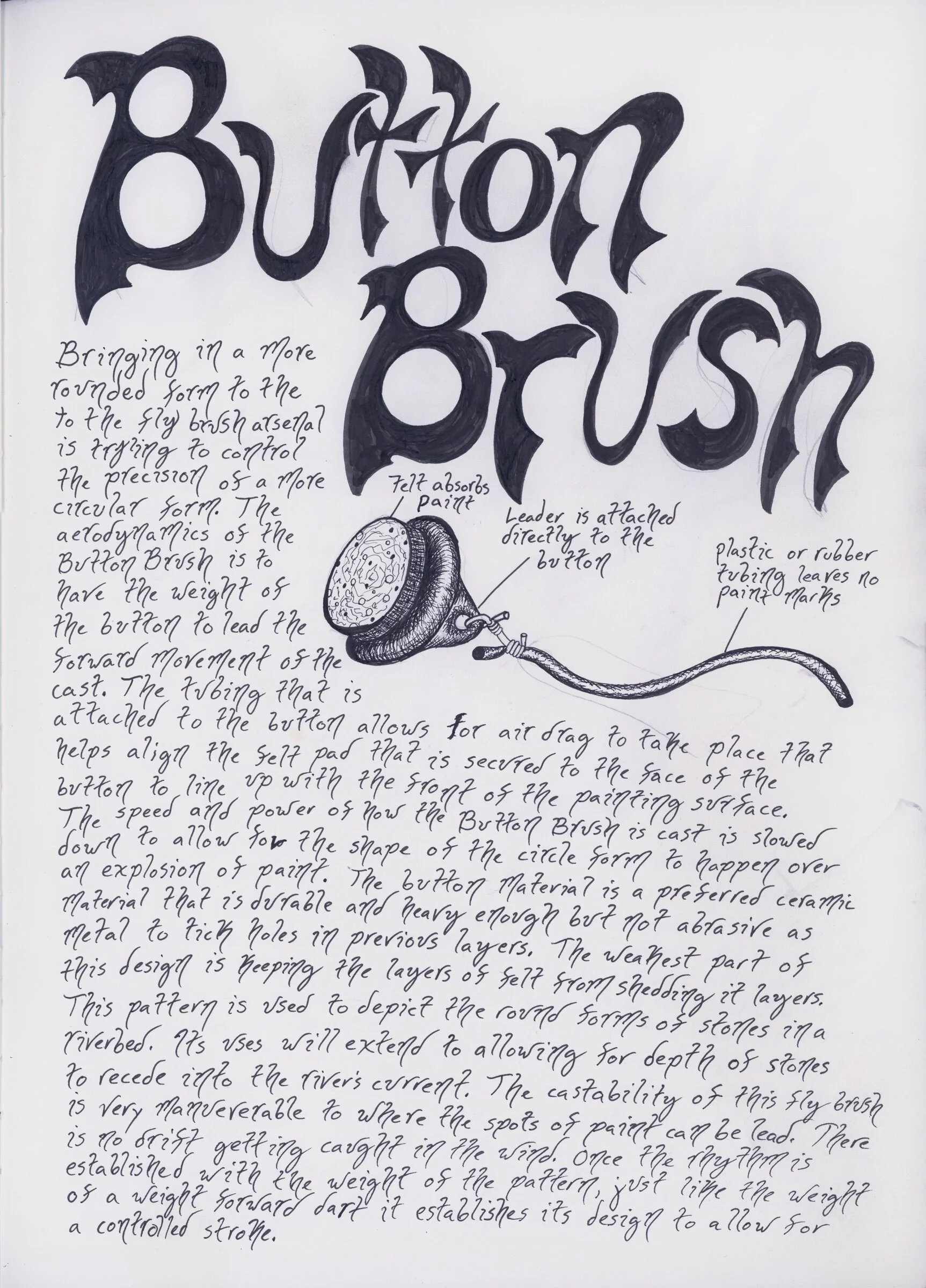
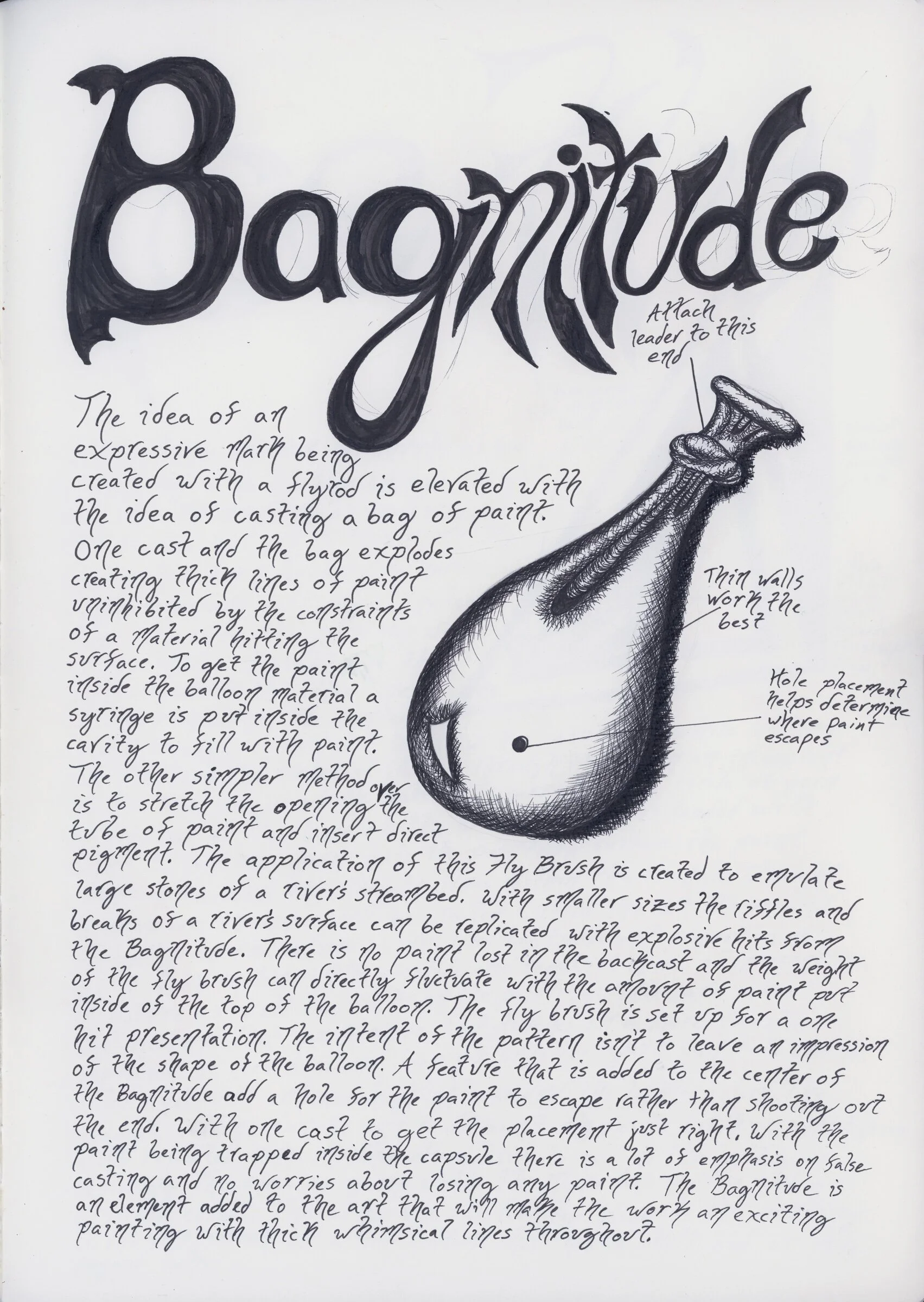
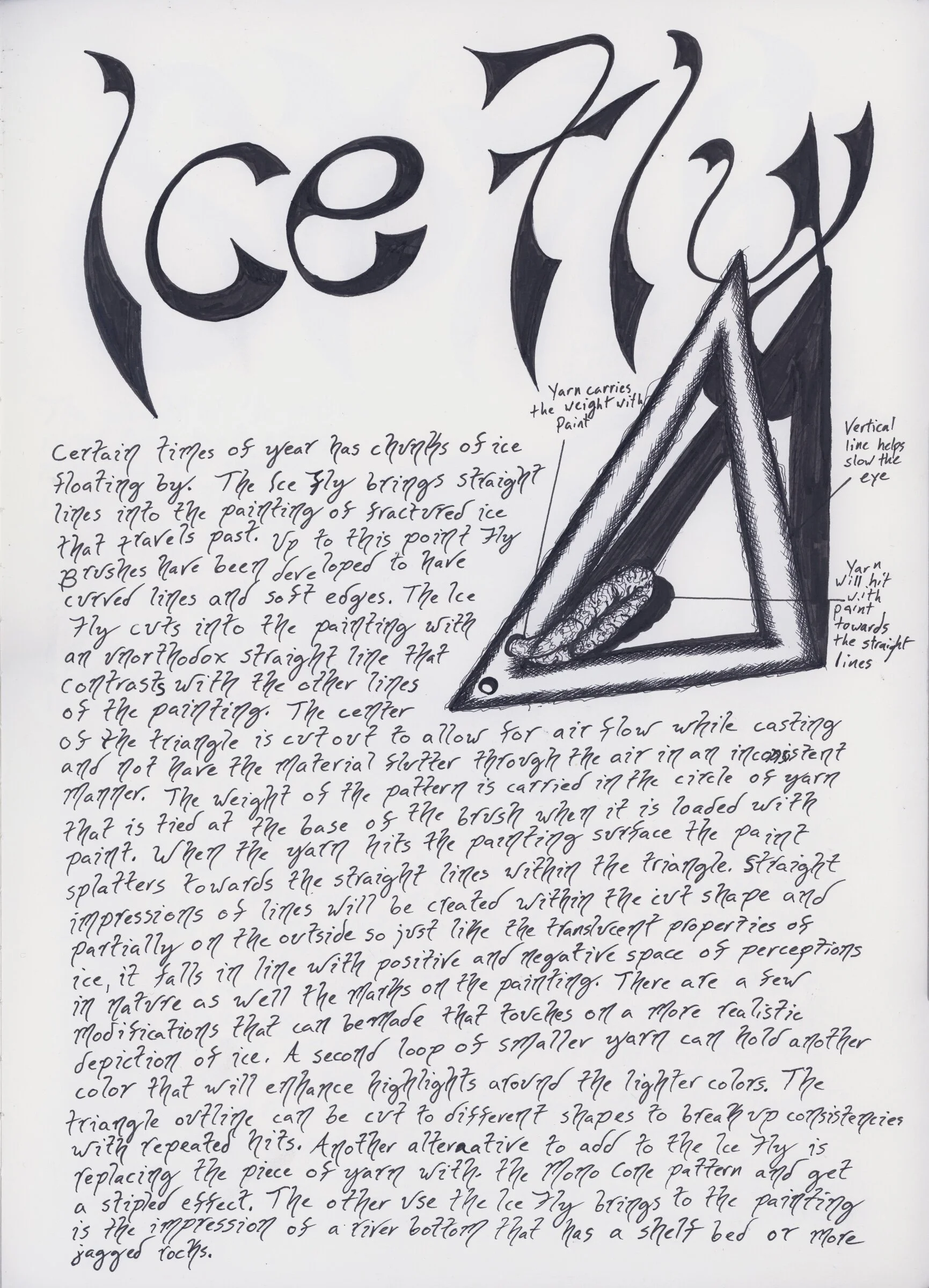
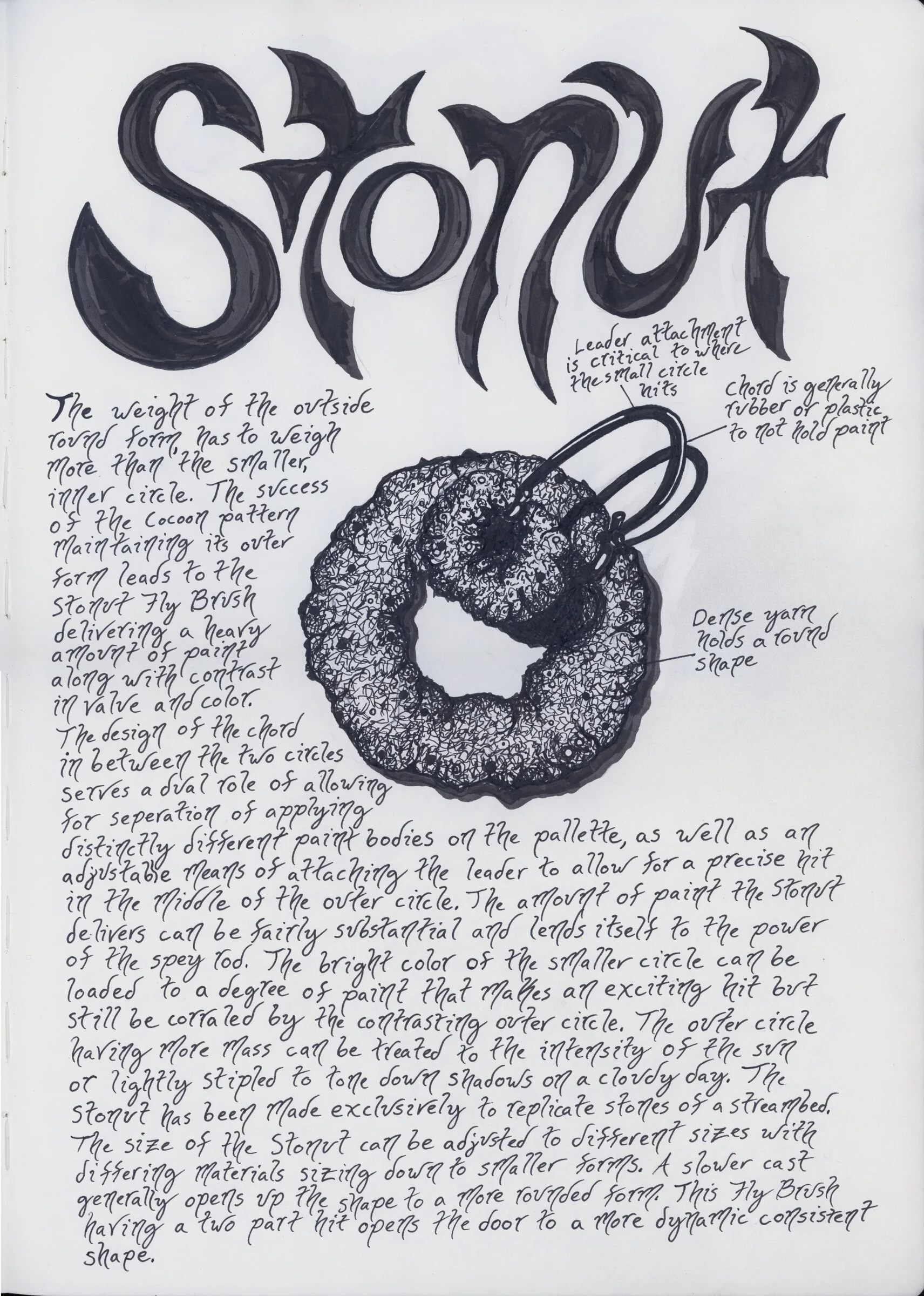
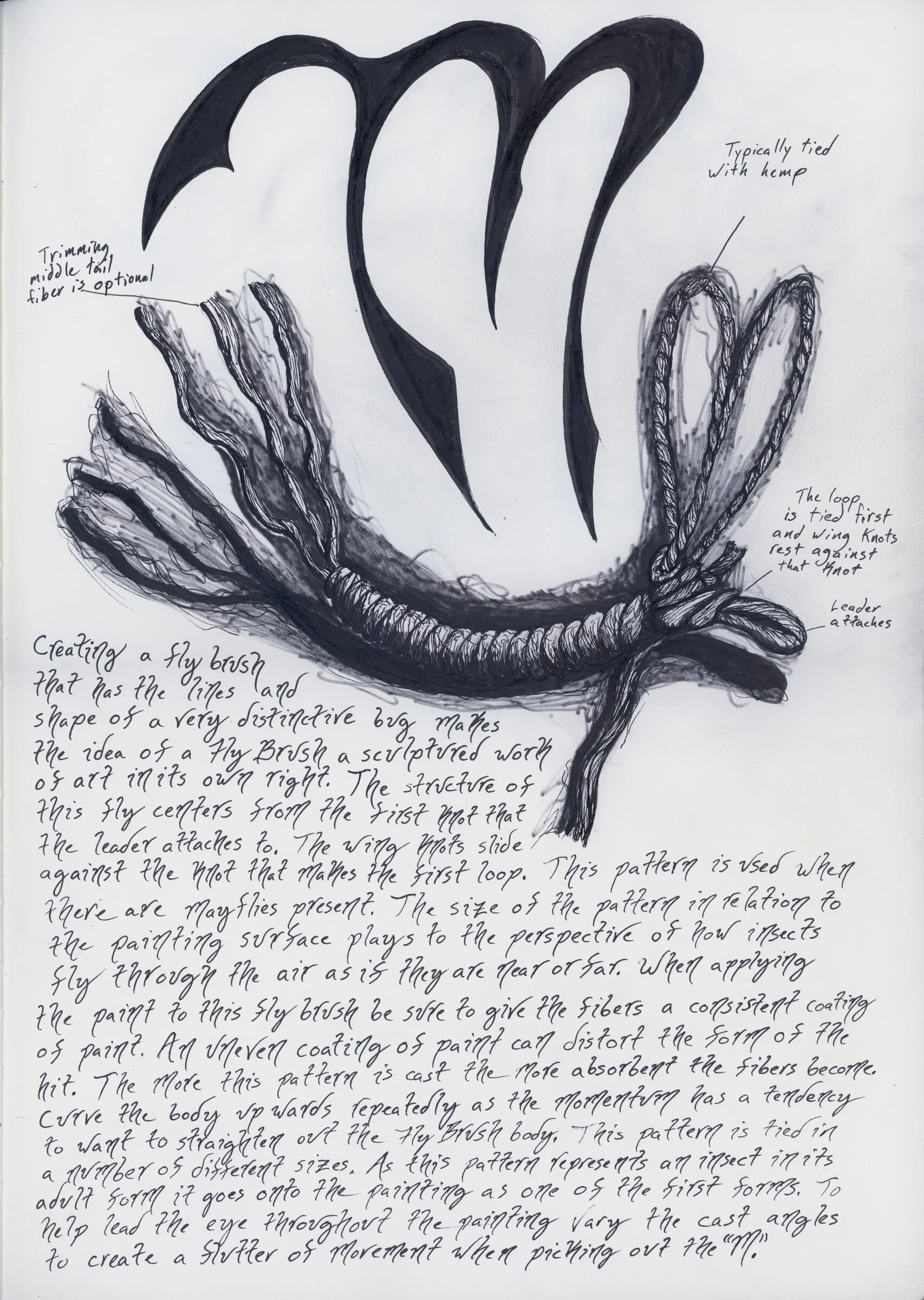
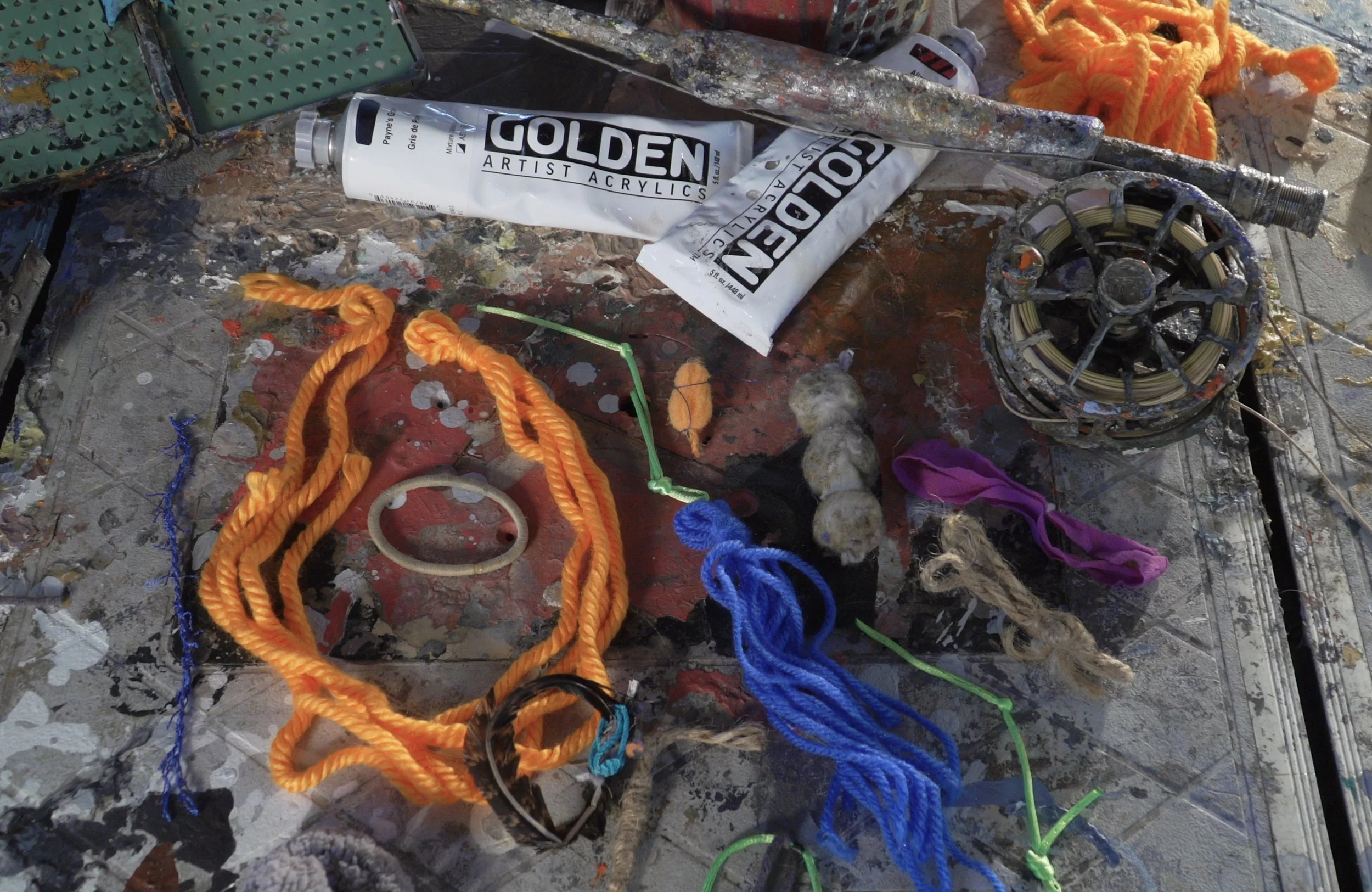
On the end of the rod, Miller attaches what he calls Fly Brushes, designed from wool, cotton, rubber, nylon and other materials, soaked in paint and then cast onto clear acrylic panels or blocks.
Each Fly Brush behaves differently in motion, delivering its own weight, rhythm, and pattern of marks. Illustrated and named in Miller’s own journal, they form a working vocabulary that allows him to respond to the river one cast at a time. Some Fly Brushes strike softly and disperse color. Others hit with force, fragmenting paint or leaving dense accumulations.
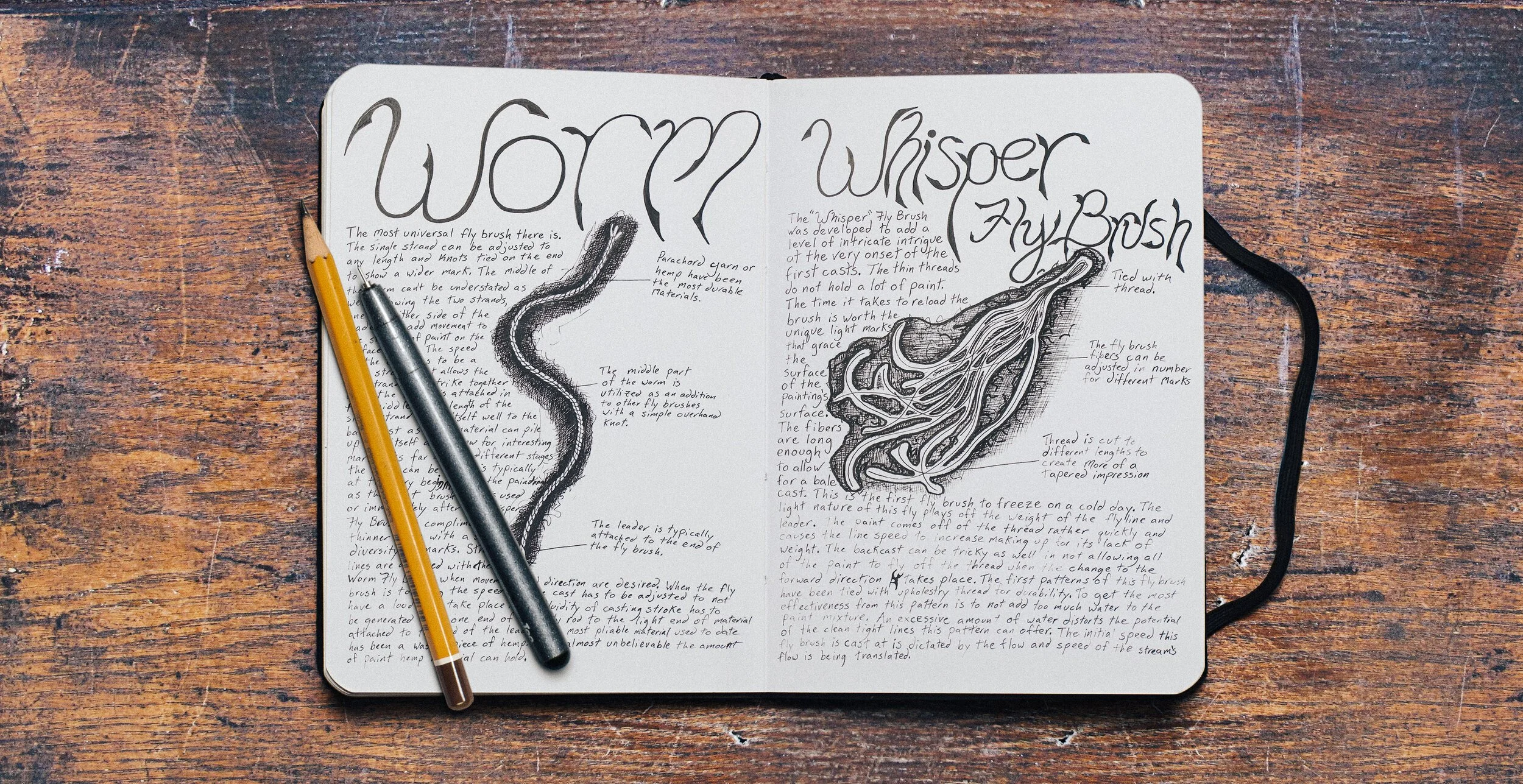
Ben’s journal with Fly Brush illustrations and annotations
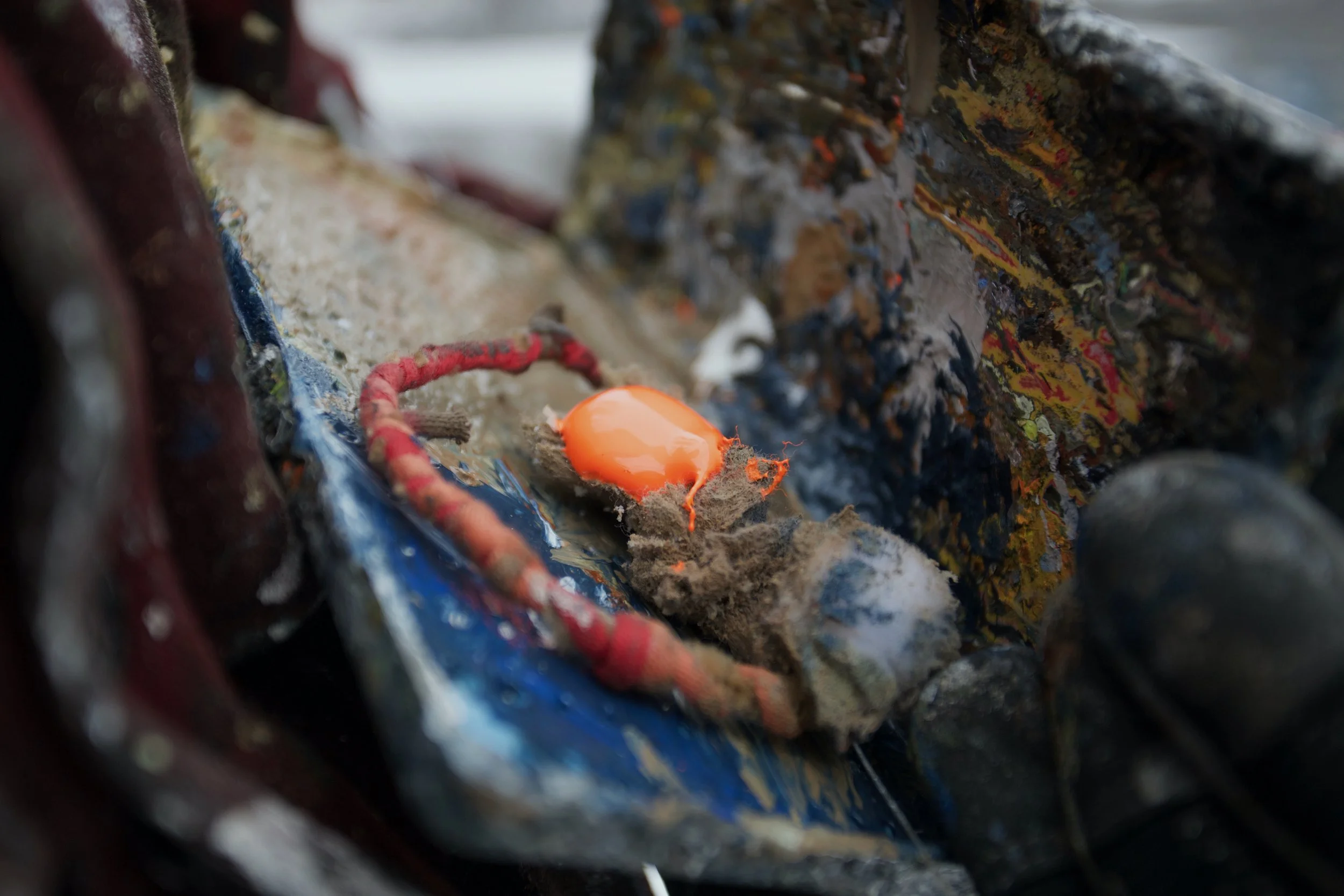
Rather than a traditional palette, Miller carries paint the way an angler carries flies. Tubes of color, along with his Fly Brushes, ride at his hip in a creel. Paint is blended in an open fly box, keeping color selection mobile and responsive to the conditions of the river. The tools of fly fishing — rod, line, creel, and fly box—become the tools of painting.
The painting unfolds through thousands of casts on the plexiglass. Each hit records a decision: angle, speed, distance, load. The first marks record what sits on the river’s surface — reflections, foam, and current. Control is exercised, surrendered, and reasserted as the work builds through repetition and response. The casting concludes when the river’s depth has been built — from surface light down to stones and boulders. Only after the casting is finished and the panel turned around does the river come into view.
Like fly fishing, painting depends on deception. A fly convinces a fish it is alive. A painting convinces a viewer they are seeing space, depth, and movement.
As art historian Sarah Rogers has noted, “Miller challenges the perceived dichotomy between abstraction and figuration; creating paintings which are both abstract representations of the natural figurative world, and representational works of an inherently abstract subject.”
“Miller’s Fly Brushes are… alternative life forms in mostly natural shapes, creatures with long feelers, short wings, and fat thoraxes — a private entomology of special effects.”
Joe Gioia, Photographer, writer, and critic
Read the full text →
“Ben had these little strips of fabric, single pom poms, and an octopus-like thing that the day prior had perhaps been part of a mop. And when soaked with paints he mixed from a fishing creel, and cast with Zen-like accuracy, left their unique impressions onto the canvas.”
Dave Corcoran, renowned fly fisherman
Read the full text →
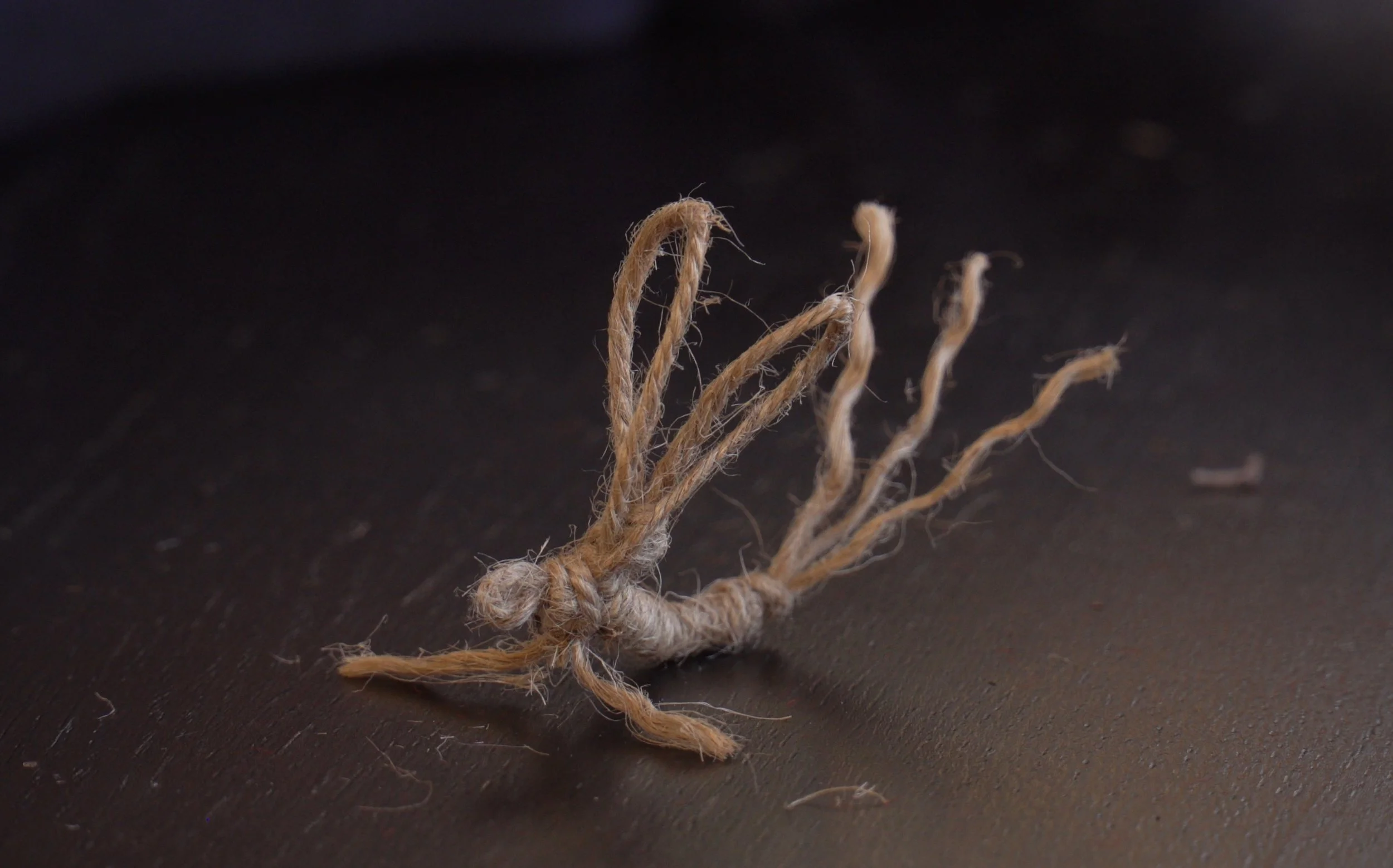
A Fly Brush
A Fly Brush laden with paint in Ben’s fly box
Ben’s workbench: Golden paint tubes, Fly Brushes, fly box, Winston fly rod and reel
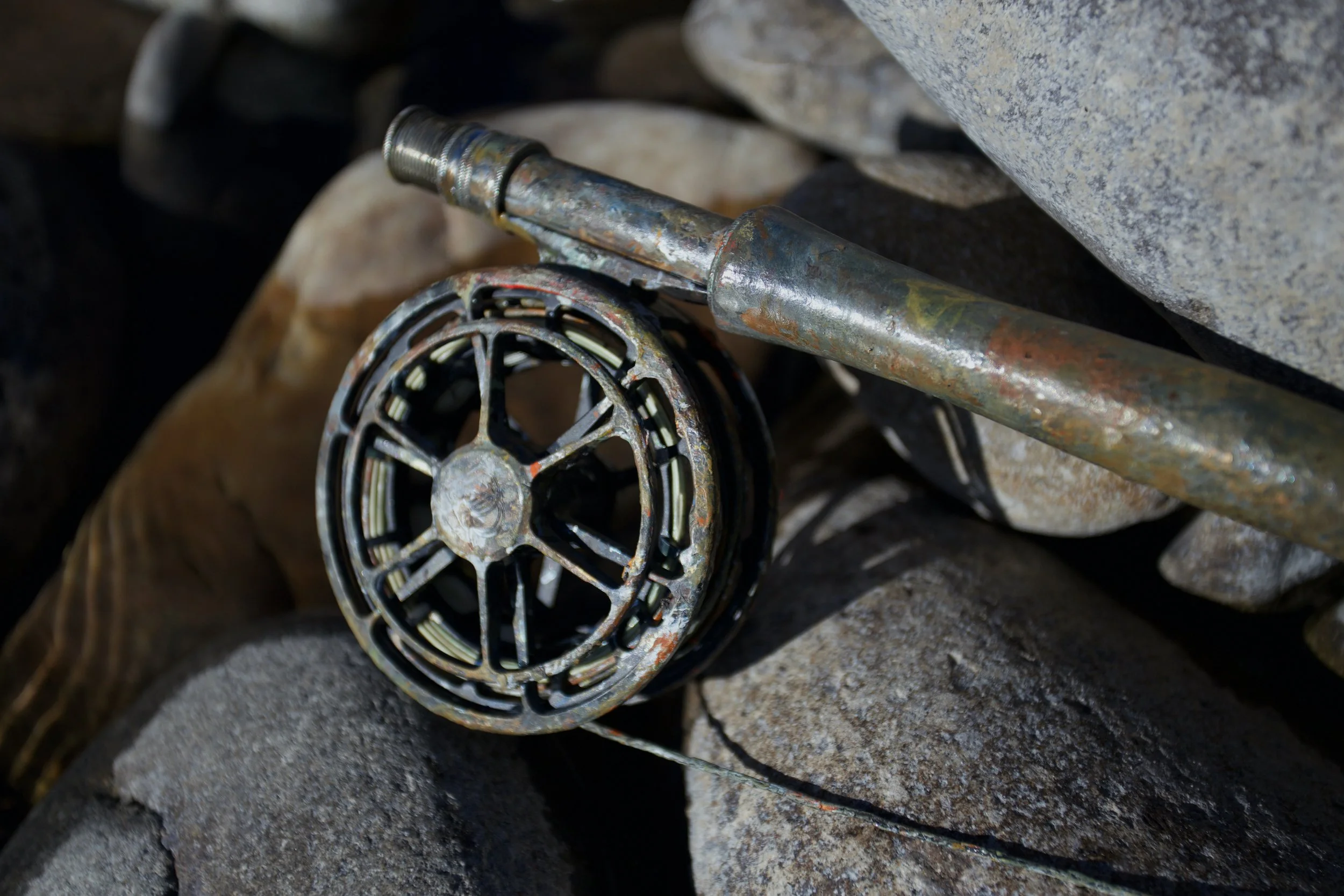
Ben’s paint-splattered fly reel